Key takeaways
- Identify dishwasher salt, detergent and rinse-aid compartments using a model-specific map before refilling. Keep products and water-hardness settings distinct.
What's inside
Dishwasher salt belongs to a compatible machine’s water-softening system; dishwasher detergent belongs in the dispenser specified for washing dishes. They are different products with different jobs. Before adding either, identify the compartments in the manual for your exact dishwasher. A cap in the bottom of the tub is not a spare detergent opening, and an all-in-one tablet does not tell you whether your particular machine needs separate salt.
Start with the machine, not the packet
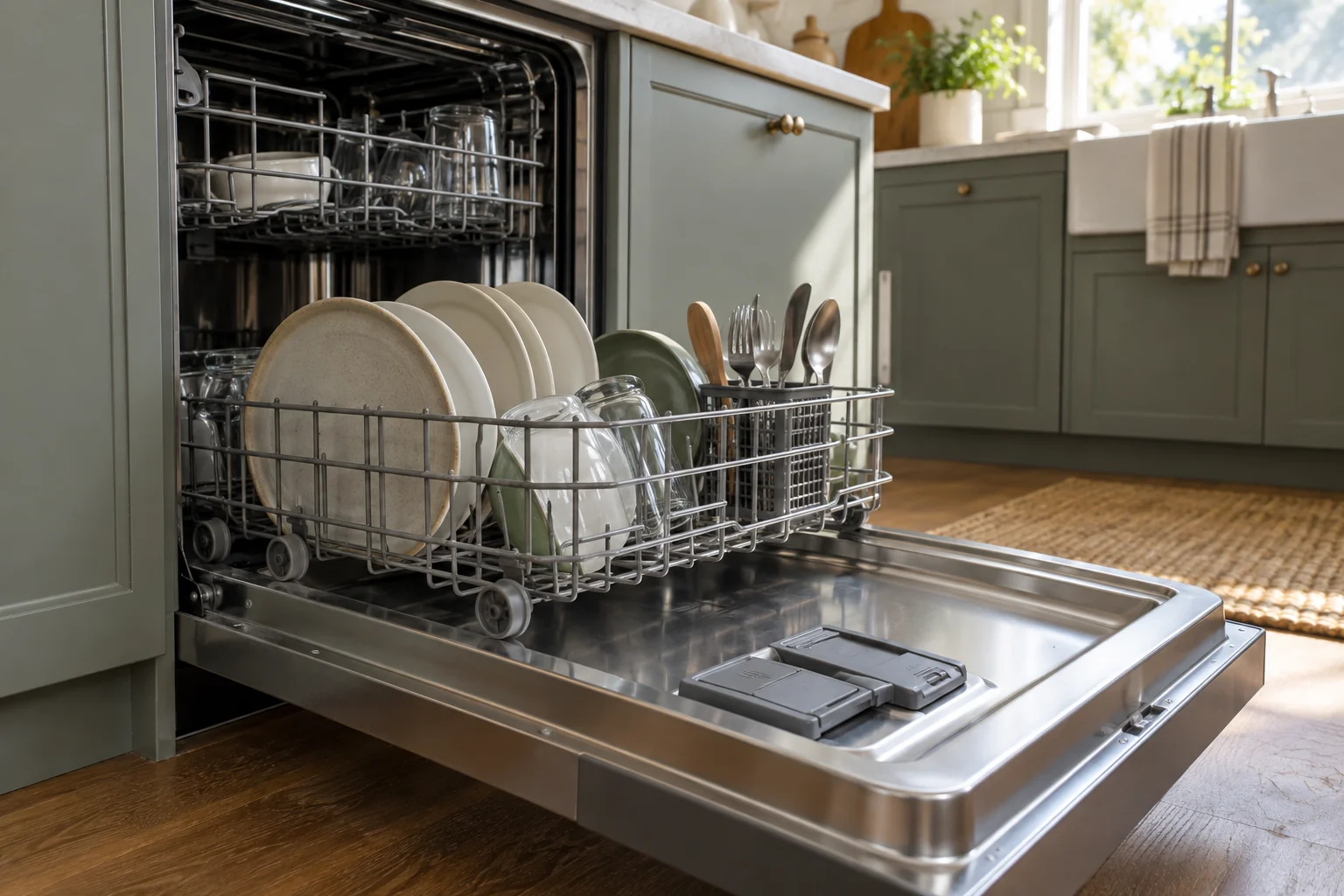
Find the complete model identifier and open its appliance-interior diagram. Look for three separate entries: the detergent dispenser, the rinse-aid reservoir and, if fitted, the special-salt reservoir. Copy the names and diagram numbers into a note. Do not assume a friend’s dishwasher has the same layout or that every dishwasher has a user-filled softener.
Use the manual’s diagram to match each component physically before opening a package. If the drawing does not match the machine, pause and check the model suffix, country version and document. A removable filter assembly also occupies the bottom of many tubs; its position alone does not identify a salt reservoir. A product photograph online is useful for orientation, but it is not a substitute for the correct diagram.
What the separate compartments are for
Bosch’s dishwasher-salt explanation distinguishes purpose-made dishwasher salt from ordinary table salt. Its role relates to the water-softening system, rather than acting as the detergent that cleans the load. That distinction is why similar-looking granules should not be treated as interchangeable.
In the Bosch SM/SB instruction manual, special salt and detergent have separate instructions. The manual warns that detergent in the salt dispenser can damage the softening unit. Its detergent section instead directs the washing product into the detergent dispenser. This is a specific documented example, not a claim that every dishwasher shares its layout, quantities or settings.
| Item to identify | Record from your manual | Question to settle before filling |
|---|---|---|
| Detergent dispenser | Name, diagram number and recommended product type | Where does this machine require powder, liquid or a tablet? |
| Special-salt reservoir, if fitted | Cap location and applicable softener instructions | Does this model use separate salt at the local water hardness? |
| Rinse-aid reservoir | Its own cap, indicator and product directions | Am I confusing its opening with the detergent compartment? |
| Water-hardness setting | Value, units, source and date | Does the setting match the water supplied to this machine? |
| Refill indicator | Exact symbol and manual explanation | Which consumable does the light actually refer to? |
Build a two-minute household compartment map
Take a clear photograph of the open, cool machine when it is not operating. Make a separate annotated copy on your phone that labels the verified openings. Keep the unedited photograph too, so a mistaken annotation can be checked against the manual. Store both with the model number. This is particularly helpful in a shared home where the person buying supplies is not always the person loading dishes.
Beside the map, list the full product names currently used. Retain products in their labeled original packaging and follow their storage precautions. A handwritten note saying “white powder goes here” is unreliable because several household products can look alike. A better note says which product type the manufacturer specifies, which compartment it belongs to, and where the applicable instructions are saved.
An illustrative check before the first refill
Suppose a household has inherited a dishwasher with a salt indicator illuminated and a box of all-in-one tablets. The household finds a matching manual that shows a built-in softener. They record the water supplier’s hardness information, including its units, then compare that information with the manual’s settings and combination-detergent guidance.
The useful outcome is a completed decision record: “This model has a salt reservoir; the manual identifies its cap here; this water-hardness range requires this setting; these are the relevant refill instructions.” The outcome is not “the tablet has salt written on it, so every reservoir can be ignored.” Conversely, a household whose verified machine has no user-filled salt system should not improvise a place to add salt.
Keep quantities and refill sequences model-specific
Do not copy a reservoir capacity, first-use water quantity or button sequence from another appliance. The correct refill procedure may include timing, spill handling and a particular way to close the cap. Read the complete sequence before starting so you are not halfway through with an unidentified opening. Use the manufacturer’s procedure rather than a generic top-up checklist.
If local water is treated before it reaches the dishwasher, note that fact when asking for setting advice. Record the information you actually have rather than guessing that all water in a town has identical hardness. Similarly, do not change settings merely to extinguish an unfamiliar indicator; identify its meaning first.
If a product went into the wrong opening
Stop before running another cycle or adding another chemical to “cancel it out.” Record the product name, approximate amount, compartment and whether a cycle has already run. Ask the appliance manufacturer or authorized service provider for model-specific next steps. Do not dismantle the softener, improvise flushing instructions or assume that a normal-looking wash proves no damage occurred.
The practical prevention is simple: one verified compartment map, correctly identified products and a short record of the applicable settings. Revisit that record when the machine, water supply or cleaning product changes. Those checks make an unfamiliar dishwasher easier to use without turning somebody else’s refill routine into a universal rule.