
Key takeaways
- Sweat level decides the surface. Dry hands do well on rubber or PVC. Heavy sweat needs an absorbent polyurethane or microfiber top, which grips harder as moisture arrives instead of turning to glass.
- Thickness is a trade, not an upgrade. 3–4 mm gives you floor feedback for balance work; 6–8 mm protects knees, hips and spine during kneeling and supine sequences.
- Weigh it before you commit. Premium mats run 5–7 lb. If you walk or bike to class, that difference is felt every trip; if the mat lives beside your couch, ignore weight entirely.
- Check the length against your height. Standard mats are 68 inches. Anyone over about 5’10” should look at 71- or 79-inch versions to keep heels and head off bare floor in Savasana.
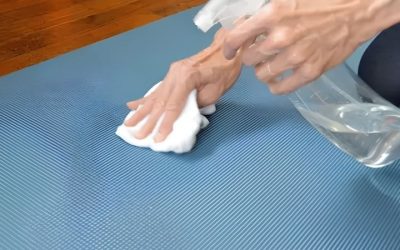
- Read the care rules first. Natural rubber degrades in direct sun and dislikes oil-based cleaners. Open-cell mats absorb sweat and need real drying time, not a quick wipe.
What's inside
Grip is the whole ballgame. You can own the prettiest mat in the studio, but if your front hand slides two inches during Warrior II every time your palms get damp, you will spend the class fighting the floor instead of using it. The mats that actually solve this problem do it in different ways: dense polyurethane that drinks sweat, raw rubber that bites into skin, or a microfiber top layer that only wakes up once you spritz it.
What follows is a shortlist built around practice type rather than a single “best” verdict. A 6mm rubber slab is a gift to knees during long restorative holds and a liability when you are balancing on one foot. A 1.5mm travel mat folds into a carry-on and transmits every pebble in the park. Match the mat to what you actually do three times a week, not the practice you keep meaning to start.
As an Amazon Associate we earn from qualifying purchases at no extra cost to you. Product prices and availability are accurate as of the date shown and are subject to change.




Prime
Gaiam Thick Yoga Mat with Easy-Cinch Carrying Strap
View on Amazon
July 17, 2026

Retrospec
Prime
Retrospec Solana Yoga Mat 1" Thick w/Nylon Strap for Men & Women – Non Slip Exercise Mat for Home Yoga, Pilates, Stretching, Floor & Fitness Workouts
View on Amazon
July 17, 2026

wimwum
Prime
Extra Wide Yoga Mat 72" x 32", 6mm Non Slip TPE Exercise Mat with Carrying Strap, Large Workout Mat for Yoga, Pilates, Stretching, HIIT & Home Gym
-30%
View on Amazon
July 17, 2026

YOTTOY
Prime
YOTTOY Yoga Mat,Extra Thick Yoga Mat (1/2inch),Professional TPE Exercise Mat,Non-Slip Workout Mat for Yoga, Pilates, Fitness, Barefoot Workouts, Home Gym Studio with Strap
View on Amazon
July 17, 2026

AmazonBasics
Prime
Amazon Basics Extra Thick Exercise Yoga Mat with Carrying Strap
View on Amazon
July 17, 2026
View on Amazon
never
Quick Comparison
| Mat | Thickness | Surface Material | Best For |
|---|---|---|---|
| Manduka PRO | 6 mm | Closed-cell PVC | Joint support, decades of use |
| Liforme Original | 4.2 mm | Polyurethane over rubber | Alignment-focused practice |
| lululemon The Mat | 5 mm | Polyurethane / rubber base | Sweaty vinyasa |
| Jade Harmony | 4.8 mm | Open-cell natural rubber | Instant dry grip |
| B YOGA B MAT Strong | 6 mm | Natural rubber | Cushion plus traction |
| Manduka eKO Superlite | 1.5 mm | Natural rubber | Travel and hotel rooms |
| Gaiam Premium | 6 mm | Printed PVC | Beginners on a budget |
| Yoga Design Lab Combo | 3.5 mm | Microfiber over rubber | Hot yoga, towel-free |
| Alo Warrior | 5 mm | Textured rubber | Everyday studio flow |
| Gorilla Mats Premium | 8 mm | Textured polyurethane | Home yoga plus HIIT |
How to Choose
- Sweat level decides the surface. Dry hands do well on rubber or PVC. Heavy sweat needs an absorbent polyurethane or microfiber top, which grips harder as moisture arrives instead of turning to glass.
- Thickness is a trade, not an upgrade. 3–4 mm gives you floor feedback for balance work; 6–8 mm protects knees, hips and spine during kneeling and supine sequences.
- Weigh it before you commit. Premium mats run 5–7 lb. If you walk or bike to class, that difference is felt every trip; if the mat lives beside your couch, ignore weight entirely.
- Check the length against your height. Standard mats are 68 inches. Anyone over about 5’10” should look at 71- or 79-inch versions to keep heels and head off bare floor in Savasana.
- Read the care rules first. Natural rubber degrades in direct sun and dislikes oil-based cleaners. Open-cell mats absorb sweat and need real drying time, not a quick wipe.
Top Picks Reviewed
1. Manduka PRO
The workhorse. Its dense closed-cell construction means the mat does not compress into the floor under your hands, so planks and Chaturangas feel stable rather than mushy. The catch is a break-in period: fresh out of the box the surface is slick, and it takes weeks of practice, or a salt scrub, to develop real traction. It is heavy and it is worth it.
2. Liforme Original
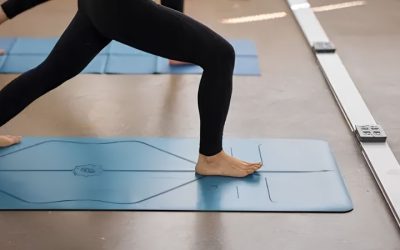
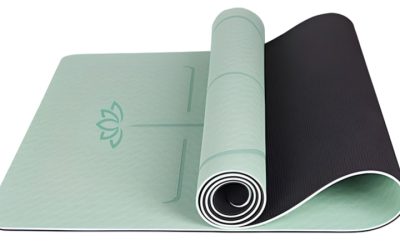
The etched centre line, hip-width markers and angled guides turn the mat into a self-correction tool, which is a genuine advantage for home practitioners without a teacher watching. The polyurethane top holds firm through a sweaty hour. It is on the softer side, so expect visible wear if you drop into arm balances daily.
3. lululemon The Mat
Two surfaces in one: an absorbent polyurethane face for hot classes and a natural rubber underside for dry practice. Sweat gets pulled in rather than pooling, which keeps hands planted through long standing sequences. The absorbent side stains and picks up smells over time, so wipe it after every session and let it air properly.
4. Jade Harmony
No break-in, no ritual. Open-cell rubber grabs skin from the first Downward Dog, which makes it the friendliest option for anyone frustrated by slippery mats. That porous surface also drinks sweat and body oil, so it ages faster than closed-cell alternatives. The natural rubber smell fades after a couple of weeks of airing out.
5. B YOGA B MAT Strong
A rare mat that delivers 6mm of cushion without feeling spongy under the hands. Rubber gives reliable dry-to-damp grip, and the flat lay is immediate; no curled corners on day one. It is one of the heavier mats here, so treat it as a studio-locker or home mat rather than a daily commuter.
6. Manduka eKO Superlite
Folds like a shirt into a suitcase and weighs about two pounds. The rubber surface grips far better than the thin foam mats hotels lend out, and it doubles as a topper over a questionable studio rental. At 1.5 mm you feel the floor completely, which is fine for standing work and rough on knees.
7. Gaiam Premium
The sensible entry point. Six millimetres of cushioned PVC covers the basics for beginners still deciding whether yoga sticks, and it is light enough for a teenager to carry. Grip fades once palms get wet, so pair it with a towel for heated classes. Expect a year or two of regular use, not a decade.
8. Yoga Design Lab Combo
A microfiber towel bonded to a rubber base, which removes the annoyance of a separate towel sliding around. The surface is genuinely slippery when bone dry and becomes tacky once you sweat or mist it, so it is built specifically for heated rooms. Machine washable, and the prints are the loudest on this list.
9. Alo Warrior
A well-judged middle path: 5 mm of support, a textured rubber face with dependable grip, and a moisture-resistant surface that wipes clean in seconds. It stays put on hardwood and does not bunch during transitions. Best suited to general vinyasa and strength-flow classes rather than hour-long floor-based restorative work.
10. Gorilla Mats Premium
Oversized and thick, which makes it less a yoga mat than a home training surface that yoga happens on. The 8 mm cushion absorbs jumps and burpees, and the extra width means no stepping onto cold tile mid-flow. The softness that protects joints also reduces stability in single-leg balances.
Frequently Asked Questions
Why does my mat get slippery halfway through class?
Closed-cell surfaces such as PVC repel moisture, so sweat sits on top and forms a film. Either switch to an absorbent polyurethane or open-cell rubber mat, or add a grip towel. On a new Manduka-style mat, a coarse sea-salt scrub followed by 24 hours of drying accelerates the break-in that eventually solves this.
How thick should a mat be for bad knees?
Look at 6 mm and up, and prioritise density over softness. A dense 6 mm mat distributes pressure better than a squishy 8 mm one that bottoms out under a kneecap. A folded blanket or knee pad on a thinner mat is a workable alternative if you also need balance stability.
Can I put a rubber mat in the washing machine?
No. Natural rubber and polyurethane both break down in a machine cycle. Wipe with diluted white vinegar or a water-based mat cleaner, then hang to dry away from sunlight. Only microfiber-topped mats designed as towel hybrids, like the Combo Mat, are machine safe, and then only on cold and gentle.
Is a latex allergy a problem?
It can be. Natural rubber mats contain latex proteins, so anyone with a sensitivity should choose PVC, TPE or polyurethane-topped options instead. Manufacturers usually flag this clearly in their materials list, and the smell is a reliable tip-off that a mat is rubber-based.
Final Thoughts
There is no single winner here, only a good match. Practise hot and sweaty, and an absorbent top layer will change your relationship with Downward Dog overnight. Spend your time in long floor holds, and density plus thickness matter more than tackiness. Commute on foot and weight quietly outranks everything else. Pick the mat that fits the practice you already do, keep it clean, keep it out of the sun, and it will outlast several rounds of good intentions.
Write Your Review
No reviews yet. Be the first to share your experience!