
Key takeaways
- Read the steel, not the sticker. Frame tubing in the 11-gauge range with 2×3-inch or 3×3-inch uprights resists flex far better than 14-gauge tubing, regardless of what the advertised weight capacity claims. Capacity ratings are measured statically; a moving lifter loads a frame unevenly.
- Inspect the pad construction. Look for a plywood or steel backing board, high-density foam at least two inches thick, and stitched vinyl rather than stapled-and-glued upholstery. Seam failure is the single most common complaint in long-term reviews.
- Prefer ladder adjustment for heavy work. Ladder-and-peg systems carry load through steel-on-steel contact with almost no play. Single pop-pins are faster to change but develop wobble as the hole wears, especially on decline settings.
- Measure the pad height and width. A 17–18 inch seat height lets most lifters plant their heels flat, which stabilizes the press. Pad width around 10–12 inches supports the ribcage without pinching shoulder blade retraction.
- Check the footprint against your rack. Wide tripod bases look stable but often collide with rack uprights, forcing you to bench off-center. Measure the base spread before buying if you train inside a power rack.
What's inside
The fastest way to learn whether a bench deserves your money is to load a bar to 225 pounds, unrack it, and pay attention to your shoulder blades. A well-built frame stays inert. A cheap one telegraphs every shift through the pad — a faint sway at the pivot, a click from the adjustment ladder, a rocking sensation that makes you cut the set short. Durability in a weight bench isn’t an abstract virtue; it’s the difference between a piece of equipment you trust under load and one you quietly stop using.
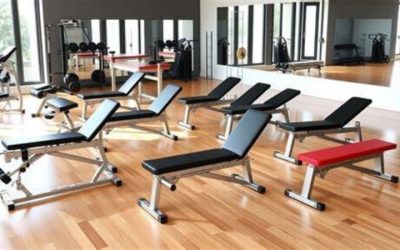
Buyers who report years of trouble-free use tend to describe the same handful of traits: thick-wall steel instead of thin stamped tubing, welds that look deliberate rather than smeared, pads that stay stitched at the seams instead of splitting where your lats sit, and adjustment mechanisms with no daylight in them. The picks below are organized around those traits rather than around marketing spec sheets, and each one is matched to a specific way people actually train — barbell pressing, dumbbell work in a tight room, or a bit of both.
As an Amazon Associate we earn from qualifying purchases at no extra cost to you. Product prices and availability are accurate as of the date shown and are subject to change.

#1 Pick

#2 Pick

#3 Pick

#4 Pick

#5 Pick
#6 Pick


Quick Comparison
| Pick | Type | Adjustment | Typical Load Rating | Best For |
|---|---|---|---|---|
| Heavy-Gauge Flat Utility Bench | Flat, fixed | None | 1,000 lb+ combined | Barbell bench press, rack work |
| Ladder-Adjust FID Bench | Flat / incline / decline | Ladder pegs | 700–1,000 lb combined | All-around home gym use |
| Compact Folding Adjustable Bench | Adjustable, folding | Pop-pin | 600–800 lb combined | Apartments, shared spaces |
| Zero-Gap Incline Bench | Flat / incline | Ladder pegs | 800 lb+ combined | Heavy dumbbell pressing |
| Wide-Pad Competition-Style Bench | Flat, fixed | None | 1,000 lb+ combined | Powerlifting, max-effort singles |
How to Choose
- Read the steel, not the sticker. Frame tubing in the 11-gauge range with 2×3-inch or 3×3-inch uprights resists flex far better than 14-gauge tubing, regardless of what the advertised weight capacity claims. Capacity ratings are measured statically; a moving lifter loads a frame unevenly.
- Inspect the pad construction. Look for a plywood or steel backing board, high-density foam at least two inches thick, and stitched vinyl rather than stapled-and-glued upholstery. Seam failure is the single most common complaint in long-term reviews.
- Prefer ladder adjustment for heavy work. Ladder-and-peg systems carry load through steel-on-steel contact with almost no play. Single pop-pins are faster to change but develop wobble as the hole wears, especially on decline settings.
- Measure the pad height and width. A 17–18 inch seat height lets most lifters plant their heels flat, which stabilizes the press. Pad width around 10–12 inches supports the ribcage without pinching shoulder blade retraction.
- Check the footprint against your rack. Wide tripod bases look stable but often collide with rack uprights, forcing you to bench off-center. Measure the base spread before buying if you train inside a power rack.
Top Picks Reviewed
Heavy-Gauge Flat Utility Bench
A fixed flat bench has one job and no moving parts to loosen, which is why it consistently outlives adjustable models. The heavy-gauge version is built from thick-wall tubing with a rigid backing board and a narrow-enough profile to slide fully into a power rack. There’s no incline, no folding hinge, and no ladder to rattle. If your training revolves around the barbell bench press and you’d rather buy once than replace twice, this is the most durable dollar-per-year option in the category. Owners typically report it feels identical after several years of use — which is exactly the point.
Ladder-Adjust FID Bench
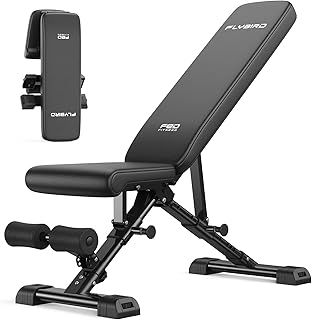
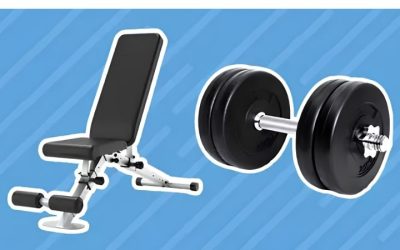
This is the practical center of the market: a flat/incline/decline bench with a ladder-peg backrest, an adjustable seat, and usually a leg roller for decline sets and ab work. The ladder mechanism is the reason it holds up. Because the backrest rests on steel pegs rather than hanging from a single pin, load transfers directly into the frame and the bench doesn’t develop the creeping looseness that plagues cheaper adjustable models. Expect a heavier unit that you’ll want to leave in place, and expect to spend a few extra minutes during assembly torquing the hardware properly — durability here depends on it.
Compact Folding Adjustable Bench
Built for people whose gym shares space with a living room. It folds flat for storage behind a door, weighs little enough to move one-handed, and still handles incline dumbbell pressing at moderate loads. The trade-off is honest: the folding hinge and pop-pin adjustment are the wear points, and this is not the bench for maximal barbell work. Within its intended range, though, the better versions hold up well — look for a locking hinge with a positive detent and avoid models whose upright legs are shorter than the pad width, which is where the rocking sensation comes from.
Zero-Gap Incline Bench
The gap between seat and backrest is where your glutes lose contact and your lower back starts compensating on steep incline sets. Zero-gap designs eliminate it, either through an overlapping pad geometry or a seat that travels with the backrest. For heavy dumbbell pressing at 30 to 45 degrees, this design difference is worth more than another 200 pounds of rated capacity. Construction is typically robust — the mechanism demands it — and the frames tend to be wider, so confirm rack clearance if you use one.
Wide-Pad Competition-Style Bench
Built to competition specifications: a broad, firm pad around 12 inches wide, a 17-inch height, and a frame that doesn’t acknowledge the bar is loaded. The dense foam feels unforgiving on first use, but firmness is a feature — a soft pad lets your shoulders sink and robs you of a stable pressing platform. This is a single-purpose tool for lifters chasing barbell numbers. It won’t incline, it won’t fold, and it will almost certainly still be usable when everything else in your gym has been replaced.
Frequently Asked Questions
Does a higher weight capacity mean a more durable bench?
Not reliably. Capacity ratings are usually static load tests and aren’t standardized across brands. Frame gauge, upright dimensions, weld quality, and base geometry predict real-world longevity far better. A bench rated for 1,000 pounds on 14-gauge tubing will flex more than an 11-gauge frame rated for 800.
Is a flat bench enough, or do I need an adjustable one?
If your program centers on the barbell bench press and overhead work, a flat bench covers it with fewer failure points. Adjustability earns its keep once you’re doing meaningful volume of incline dumbbell pressing, seated shoulder work, or supported rows. Buying adjustable “just in case” often means paying for a mechanism you rarely move.
How do I stop a bench from wobbling?
Start with the hardware — re-torque every bolt after the first week of use, since frames settle. Check that the feet are all contacting the floor and add adhesive rubber shims if your slab is uneven. If the movement originates at the pivot or pin rather than the feet, the mechanism is worn and no amount of tightening will fix it.
Are folding benches safe for heavy pressing?
For moderate dumbbell work, yes. For maximal barbell attempts, no — the hinge introduces a load path that fixed frames don’t have, and repeated heavy use accelerates play in the locking mechanism. Treat the manufacturer’s rating as an upper bound you stay well below, not a target.
Final Thoughts
Durability in this category comes down to a short list of physical facts: thick steel, honest welds, stitched pads over a rigid backing, and adjustment mechanisms that transfer load through metal rather than a single pin. Match those fundamentals to how you actually train — a fixed flat bench if the barbell is the centerpiece, a ladder-adjust FID if you want range without slop, a folding model if space genuinely dictates the choice — and the bench becomes the last thing you think about during a set. That silence under load is what you’re paying for.
Write Your Review
No reviews yet. Be the first to share your experience!