
Key takeaways
- Decide flat versus adjustable before you compare prices. An adjustable bench unlocks incline and decline angles, but it adds hinges, pop-pins, and a taller seat. A fixed flat bench has fewer failure points and almost always feels more solid per dollar. If your main lifts are flat pressing, rows, and hip work, flat is not a compromise — it is the correct tool.
- Measure the pad, not the box. Look for roughly 10 to 12 inches of width. Narrower pads let your shoulder blades slide off the edges, which sounds nice for range of motion until you realize you have nothing to press against. Wider pads restrict shoulder movement on heavy dumbbell work. Pad thickness in the 2-inch range with dense foam beats a plush 4-inch cushion that compresses into a hammock under load.
- Check seat height against your leg length. A pad sitting 17 to 18 inches off the floor is standard and lets most adults plant their feet flat. Taller benches force shorter lifters onto their toes, which kills leg drive and stability. If you are under about 5’6″, the lower end of that range is your friend.
- Look at the leg geometry. A wide-stance tripod or four-point base resists side-to-side rocking far better than two narrow uprights. Rubber or plastic feet matter too: they protect flooring and, more importantly, keep the frame from creeping across a hard surface mid-set.
- Be honest about storage. Benches that never get put away get used more. Something you can tip on end, stand in a closet, or slide under a rack will survive apartment life. If it needs to live in the middle of the room permanently, make sure the room can spare that square footage.
What's inside
The bench is the piece of equipment people buy last and regret first. Most home lifters start with dumbbells, add a barbell, then discover that the couch armrest is a terrible substitute for a padded surface with a known weight rating. A bench is what turns a pile of iron into an actual training program: it gives you a stable base for pressing, a backstop for rows, a platform for step-ups, and a place to sit while you count out the last set of curls. Get the wrong one and every rep feels like balancing on a wobbly restaurant table.
The frustrating part is that bench shopping is full of specs that sound impressive and mean very little. A “1,000 lb capacity” claim on a frame with pencil-thin tubing tells you nothing about how it behaves when 180 pounds of human shifts weight during a dumbbell press. What actually matters is narrower and duller: pad width, pad firmness, frame gauge, seat height off the floor, and whether the thing stays planted when you drive your feet into the ground. This guide walks through those variables, then looks closely at one straightforward flat bench that keeps showing up in home gyms for good reason.
As an Amazon Associate we earn from qualifying purchases at no extra cost to you. Product prices and availability are accurate as of the date shown and are subject to change.




Quick Comparison
| Bench | Type | Best For | Stated Capacity | Footprint | Notable Trait |
|---|---|---|---|---|---|
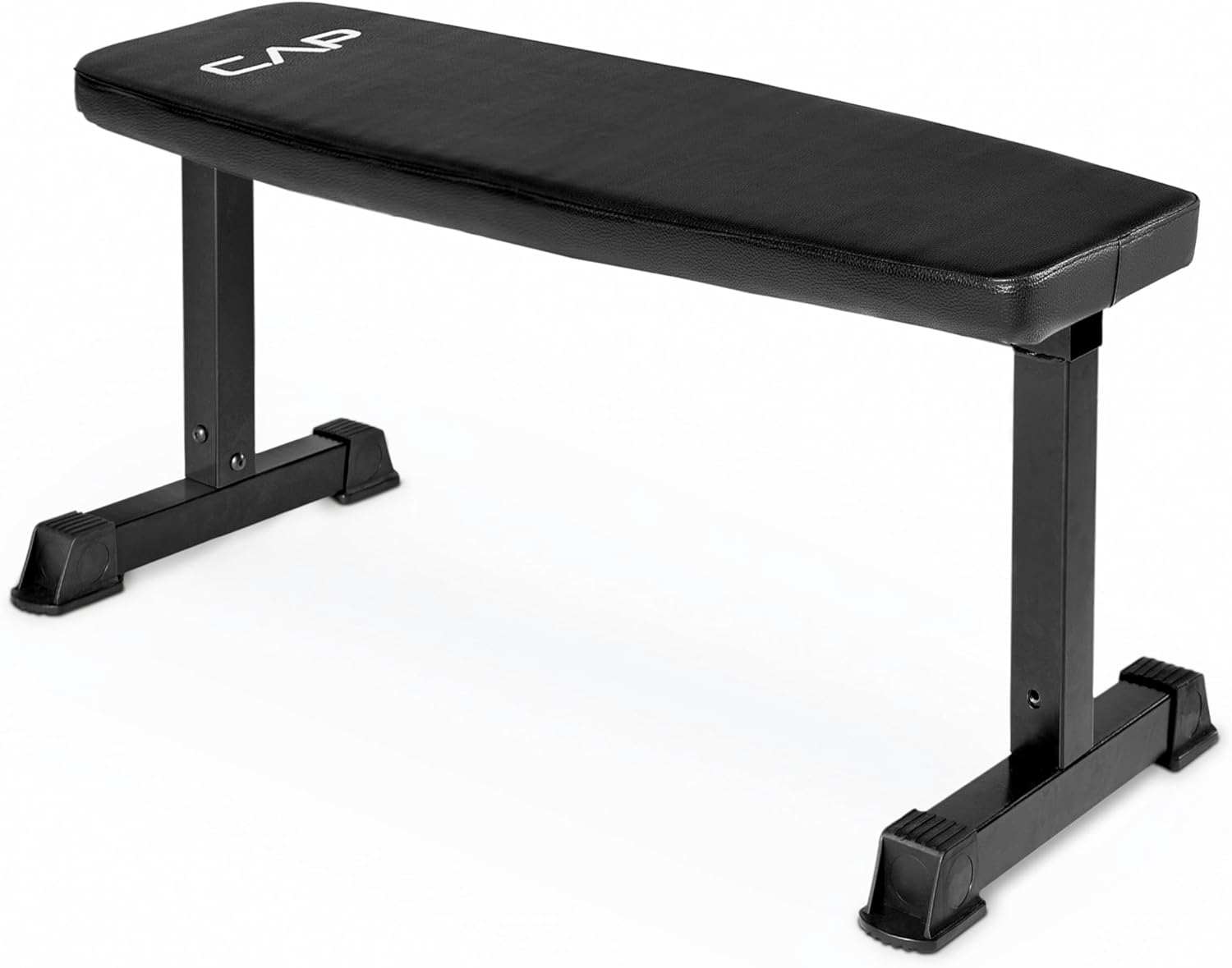
| Cap Barbell Flat Weight Bench Color Series | Fixed flat | Dumbbell pressing, rows, accessory work, tight spaces | Roughly 500 lb combined (user plus load) | Compact, low-profile, slides under a rack or bed frame | Powder-coated color options and a bolt-together steel frame at an entry price |
How to Choose
- Decide flat versus adjustable before you compare prices. An adjustable bench unlocks incline and decline angles, but it adds hinges, pop-pins, and a taller seat. A fixed flat bench has fewer failure points and almost always feels more solid per dollar. If your main lifts are flat pressing, rows, and hip work, flat is not a compromise — it is the correct tool.
- Measure the pad, not the box. Look for roughly 10 to 12 inches of width. Narrower pads let your shoulder blades slide off the edges, which sounds nice for range of motion until you realize you have nothing to press against. Wider pads restrict shoulder movement on heavy dumbbell work. Pad thickness in the 2-inch range with dense foam beats a plush 4-inch cushion that compresses into a hammock under load.
- Check seat height against your leg length. A pad sitting 17 to 18 inches off the floor is standard and lets most adults plant their feet flat. Taller benches force shorter lifters onto their toes, which kills leg drive and stability. If you are under about 5’6″, the lower end of that range is your friend.
- Look at the leg geometry. A wide-stance tripod or four-point base resists side-to-side rocking far better than two narrow uprights. Rubber or plastic feet matter too: they protect flooring and, more importantly, keep the frame from creeping across a hard surface mid-set.
- Be honest about storage. Benches that never get put away get used more. Something you can tip on end, stand in a closet, or slide under a rack will survive apartment life. If it needs to live in the middle of the room permanently, make sure the room can spare that square footage.
Top Picks Reviewed
Cap Barbell Flat Weight Bench Color Series
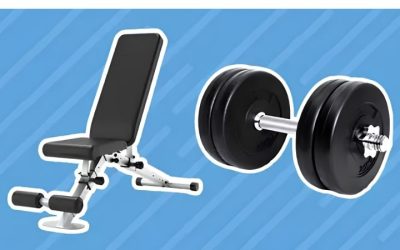
This is the bench for someone who wants to stop overthinking and start pressing. The build is deliberately simple: a bolted steel frame, a two-inch high-density pad wrapped in vinyl, and a wide-set base with capped feet. Assembly runs about fifteen minutes with the included hardware and a wrench, and the only real trick is snugging every bolt down fully — leave one loose and you will hear about it on your first set of flyes. Once it is properly torqued, the frame is quiet and the pad does not creak.
Where it earns its place is the pad geometry. The surface is firm enough that your shoulder blades stay retracted instead of sinking, which is exactly what you want for dumbbell pressing. Seat height lands in the range where most lifters can plant their heels and generate real leg drive. The vinyl covering wipes clean with a damp cloth, and the powder-coated frame comes in several colors, which is a small thing until you have a black-on-black garage and want to actually see your equipment.
The honest limitations: it does not incline, and the stated capacity around 500 pounds means it is built for moderate dumbbell and bodyweight work rather than heavy barbell benching in a rack. Treat it as a dumbbell and accessory bench and it will serve for years. Treat it as a platform for a 315-pound barbell bench and you are asking a budget frame to do a commercial bench’s job. Within its lane, it is one of the better value propositions in home fitness — and it slides under most beds and racks when you are done.
Frequently Asked Questions
Can I bench press with a barbell on a flat bench like this?
You can press a barbell, but only with a proper rack or spotter stands positioned around the bench, and only with loads well within the stated capacity. Never roll a loaded bar onto or off a bench that has no uprights, and never lift alone to failure without safety catches. For heavier barbell work, invest in a rack rated for the load and a bench designed to sit inside it.
How do I stop the bench from sliding on a hard floor?
Put something grippy underneath. A horse stall mat, a section of rubber gym flooring, or even a dense rubber-backed rug will lock the feet in place and quiet the whole setup. This also protects tile, laminate, and concrete from the frame’s plastic caps, which wear down over time and expose bare metal.
Is a flat bench enough, or will I outgrow it?
A flat bench covers flat dumbbell and barbell pressing, single-arm rows, chest-supported work when combined with a plate or block, seated shoulder presses, step-ups, hip thrusts, tricep dips, and dozens of accessory movements. Most people never actually need incline; they just assume they do. If you eventually want angles, buy an adjustable bench as an addition and keep the flat one — flat benches remain useful forever, and having two lets you set up chest-supported rows and elevated work.
How long does the vinyl upholstery last?
With basic care, several years of regular use. Sweat is the enemy: it breaks down vinyl seams over time, so wipe the pad after sessions and avoid leaving damp towels on it. Storing the bench out of direct sunlight and away from freezing temperatures also slows cracking. Small tears can be patched with vinyl repair tape before they spread.
Final Thoughts
A bench is infrastructure, not a gadget. It does not need Bluetooth, a screen, or fourteen adjustment positions — it needs to hold still while you work. Judge candidates on pad width and firmness, seat height, base stance, and realistic capacity, and ignore the rest of the marketing copy. The Cap Barbell Flat Weight Bench Color Series is a good example of what that looks like at an accessible price: a firm pad, a wide base, a sane height, and nothing extra to break. Buy the simplest bench that genuinely fits your body and your training, put a rubber mat under it, and spend the money you saved on more dumbbells.
Write Your Review
No reviews yet. Be the first to share your experience!