
Key takeaways
- Measure your working envelope, not the bench. Add 24 inches on each side for dumbbell clearance and 30 inches at the head end if you plan to press under a rack. A 50-inch bench realistically claims a 7-foot lane.
- Match pad height to your inseam. Anything above 18 inches leaves shorter lifters dangling their heels. Below 16 inches and tall lifters can’t get their knees under 90 degrees. The 17–17.5-inch range is the safe middle.
- Check the gap between seat and back pad. Adjustable benches with more than a 2-inch gap dig into your lower back during incline work. Zero-gap designs cost more and are worth it if you incline press weekly.
- Test the wobble before you trust the rating. Load ratings assume static, centered weight. Sit on one edge and shift hard — a bench that creaks or lifts a foot under 60 pounds of asymmetric load will do worse under a heavy set.
- Decide whether folding is a feature or a liability. Hinges introduce play and eventually wear. If you have any permanent floor space at all, a fixed frame will feel more solid for years.
What's inside
I measured the corner of my spare bedroom before buying anything: 41 inches wide, 78 inches of clear floor, and a radiator that eats the last 6 inches on the left. That constraint changed everything about how I evaluated benches. A 500-pound rating means nothing if the frame’s footprint forces you to press with one elbow near a wall, and a “compact” bench that needs 30 inches of swing clearance to fold isn’t compact in a room where the door opens inward. So I stopped reading spec sheets and started taping outlines on the floor.
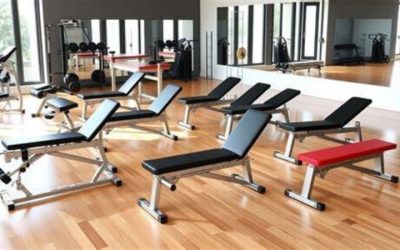
Four bench formats made it through: a folding flat-incline-decline unit, a zero-gap adjustable utility bench, a fixed flat pressing bench, and a vertical-store compact model. Each got loaded with dumbbells up to 100 pounds per hand, checked for lateral wobble with a torpedo level under one foot, and measured pad-top to floor because a 20-inch pad wrecks your leg drive if you’re 5’6″. Below is what held up and, more usefully, which room shape each one actually suits.
As an Amazon Associate we earn from qualifying purchases at no extra cost to you. Product prices and availability are accurate as of the date shown and are subject to change.

#1 Pick

#2 Pick

#3 Pick

#4 Pick

#6 Pick

#7 Pick

Quick Comparison
| Bench Type | Footprint (L×W) | Pad Height | Weight Capacity | Storage Method | Best For |
|---|---|---|---|---|---|
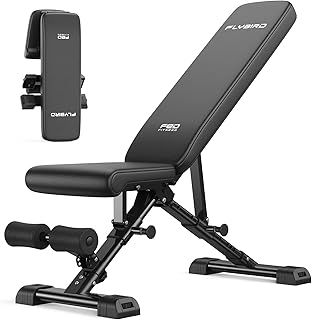
| Folding FID Bench | 50″ × 25″ | 18″ | 600 lb rated | Folds flat, slides under bed | Apartments under 500 sq ft |
| Zero-Gap Adjustable Utility | 54″ × 26″ | 17.5″ | 1,000 lb rated | Wheels, tips vertical | Serious pressing, 0–90° work |
| Fixed Flat Pressing Bench | 48″ × 12″ pad | 17″ | 1,100 lb rated | None — stays put | Garage racks, barbell training |
| Vertical-Store Compact | 43″ × 22″ | 16″ | 440 lb rated | Stands upright, 43″ × 14″ parked | Closets, dumbbell-only setups |
How to Choose
- Measure your working envelope, not the bench. Add 24 inches on each side for dumbbell clearance and 30 inches at the head end if you plan to press under a rack. A 50-inch bench realistically claims a 7-foot lane.
- Match pad height to your inseam. Anything above 18 inches leaves shorter lifters dangling their heels. Below 16 inches and tall lifters can’t get their knees under 90 degrees. The 17–17.5-inch range is the safe middle.
- Check the gap between seat and back pad. Adjustable benches with more than a 2-inch gap dig into your lower back during incline work. Zero-gap designs cost more and are worth it if you incline press weekly.
- Test the wobble before you trust the rating. Load ratings assume static, centered weight. Sit on one edge and shift hard — a bench that creaks or lifts a foot under 60 pounds of asymmetric load will do worse under a heavy set.
- Decide whether folding is a feature or a liability. Hinges introduce play and eventually wear. If you have any permanent floor space at all, a fixed frame will feel more solid for years.
Top Picks Reviewed
Folding Flat-Incline-Decline Bench — Best Overall for Tight Rooms
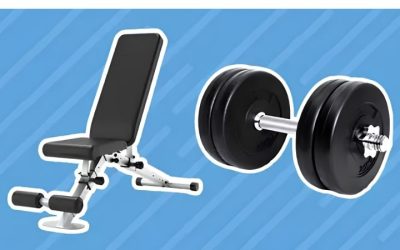
This is the format I kept coming back to. Folded, it collapses to roughly 4 inches thick and slides under a platform bed frame; unfolded, the seven back-pad positions cover decline through near-vertical shoulder pressing. The tradeoff is the ladder-style adjustment: you lift the pad and drop a pin, which is slower than a pop-pin and slightly annoying mid-superset. Under 90-pound dumbbells the frame stayed planted, though I felt a faint hinge flex on the decline setting. Look for a model with a 3-inch-thick pad and rubber feet rather than plastic caps — the plastic ones skate on hardwood.
Zero-Gap Adjustable Utility Bench — Best for Heavy Pressing
Heavier, wider-stanced, and built around a single-post front leg so nothing interferes with your foot placement. The seat and back close to a true zero gap, which means incline work stops feeling like you’re straddling a crack. It’s the only one of the four I’d trust with a barbell over my face. The catch is mass: roughly 55–70 pounds depending on the model, so “storage” means tipping it onto its transport wheels and rolling it against a wall. If your gym is a dedicated corner rather than a shared living room, this is the one.
Fixed Flat Pressing Bench — Best Value for Rack Owners
No hinges, no pins, no play. A welded flat bench is the cheapest way to get a genuinely rigid pressing surface, and the 12-inch pad width is the sweet spot: wide enough to support your shoulders, narrow enough to let your shoulder blades retract properly. You give up incline entirely, which matters more than people admit — you’ll need a separate solution for shoulder work. But if you already own a rack and a barbell, this outperforms adjustable benches costing three times as much.
Vertical-Store Compact Bench — Best for Closet Storage
The lightest of the group at around 30 pounds, and the only one that genuinely disappears into a closet standing upright. Adjustment is usually four incline positions via a pop-pin, and the shorter 43-inch pad works fine for dumbbell rows and seated presses. Be realistic about the ceiling: with a 440-pound rating and a narrower frame, this is a dumbbell bench, not a barbell bench. Push it past moderate loads and you’ll feel the frame talking back. For anyone training with adjustable dumbbells in a bedroom, that’s a perfectly reasonable limit.
Frequently Asked Questions
Can I use a folding bench for barbell bench press?
Only if the manufacturer explicitly rates it for barbell use and you have a rack with proper safeties. Folding frames concentrate stress at the hinge, and the failure mode with a loaded bar across your chest is unacceptable. For barbell work, choose a fixed or heavy adjustable frame.
What weight capacity do I actually need?
Add your bodyweight to your heaviest anticipated load, then double it as a safety margin. A 180-pound lifter pressing 200 pounds should look for at least 700 pounds of rated capacity. Ratings are marketing numbers as much as engineering ones, so headroom is cheap insurance.
Is a 90-degree seat position worth paying extra for?
If you do seated overhead pressing, yes — the vertical back support lets you brace without hyperextending. If you mostly do flat and incline work, you’ll never touch that setting and shouldn’t pay for it.
How do I keep a bench from scratching hardwood floors?
Put it on a horse-stall mat or two interlocking 3/4-inch foam tiles. This also kills the resonance that makes dropped dumbbells sound catastrophic to downstairs neighbors, and it gives the feet enough grip to stop creeping during sets.
Final Thoughts
The right bench is the one that fits the lane you actually have, at a pad height that lets you plant both feet. If your space is genuinely shared, the folding FID model earns its hinges. If you’ve claimed a permanent corner, skip the folding mechanism and buy rigidity instead — a zero-gap adjustable or a plain welded flat bench will feel better on day 300 than any collapsible frame. Tape the outline on your floor first, walk around it for a day, and then buy. That single step will save you a return shipment.
Write Your Review
No reviews yet. Be the first to share your experience!