
Key takeaways
- Measure the walkout, not just the rack. A cage’s listed depth ignores the two to three feet you need behind it to step back with a loaded bar. If your total depth is under seven feet, a half rack with front-facing J-hooks will serve you better than a cage you have to squat inside sideways.
- Check hole spacing against your lifts. Two-inch spacing is fine for squats and pull-ups. If you bench, one-inch spacing (or a “Westside” cluster around bench height) is the difference between a comfortable unrack and shrugging the bar off the hooks. Confirm spacing on the specific model rather than assuming it’s uniform across the line.
- Decide how you’ll anchor before you buy. Half racks and short-base cages want bolts into concrete or a lifting platform underneath. If you’re on a wood-joist floor or renting, choose the wider four-post base and load the plate horns with 200-plus pounds of ballast instead.
- Confirm attachment compatibility by upright dimension. A dip bar or lat tower built for 2 × 2-inch uprights with 5/8-inch holes will not fit a 2 × 3-inch frame or 1-inch pins. Match tube size and hole diameter, not just the brand name.
- Set your real load ceiling. Manufacturer capacity ratings assume even loading and correct assembly. If you’re squatting in the low hundreds, a value cage is genuinely sufficient. If you’re chasing a 500-pound rack pull, budget for a heavier gauge frame rather than testing the limit of a light one.
What's inside
The decision between a full cage and a half rack almost never comes down to strength preference — it comes down to a tape measure. Before comparing steel gauge or hole spacing, stand in the spot where the rack will live and measure three things: ceiling height at the lowest point (garage door tracks and opener rails steal four to eight inches), the depth from wall to the edge of your usable floor, and the width you can lose without blocking a doorway. A four-post cage typically eats a 48 × 53-inch patch of floor plus another two feet behind it for the bar path when you unrack. A half rack shrinks the depth to roughly 24 to 30 inches but shifts all the load forward, which changes how it must be anchored.
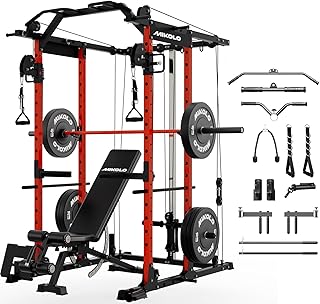
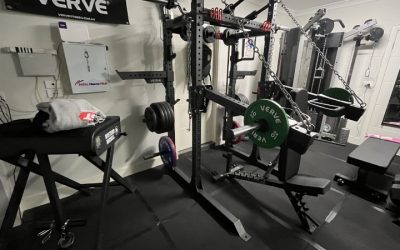
CAP Barbell’s power rack line sits in the part of the market where those tradeoffs get interesting. It’s a budget-to-midrange system built from 2 × 2-inch tubing with a modular attachment catalog — dip bars, lat/low-row towers, weight-plate storage horns, landmine posts, and safety straps — that lets a small footprint grow into something closer to a full station. That modularity is the reason it keeps showing up in one-car garages and basements with 7-foot ceilings, and it’s also where most of the buying mistakes happen, because not every CAP upright accepts every attachment. Below is a practical comparison of the configurations, followed by what actually matters when you’re choosing between a cage and a half rack for a tight space.
As an Amazon Associate we earn from qualifying purchases at no extra cost to you. Product prices and availability are accurate as of the date shown and are subject to change.

#1 Pick

#2 Pick

#3 Pick

#4 Pick

#5 Pick

#7 Pick

Quick Comparison
| Configuration | Typical Footprint | Ceiling Needed | Bail-Out Safety | Best For |
|---|---|---|---|---|
| Full 4-post cage | ~48 × 50 in + 24 in walkout | 7 ft 6 in or more | Highest — safeties on all four posts | Solo lifters going heavy without a spotter |
| Half rack (2-post with rear stabilizer) | ~48 × 28 in | 7 ft or more | Good with spotter arms; forward tipping risk if unanchored | Shallow rooms, shared garage bays |
| Squat stand / short upright | ~48 × 24 in | Under 7 ft workable | Lowest — no pull-up bar bracing | Low basements, storage between sessions |
| Cage + lat/low-row attachment | ~48 × 78 in | 7 ft 6 in or more | Highest | Replacing a gym membership entirely |
| Cage + plate storage horns | Adds ~10 in per side | No change | Improves base stability | Adding ballast instead of bolting down |
How to Choose
- Measure the walkout, not just the rack. A cage’s listed depth ignores the two to three feet you need behind it to step back with a loaded bar. If your total depth is under seven feet, a half rack with front-facing J-hooks will serve you better than a cage you have to squat inside sideways.
- Check hole spacing against your lifts. Two-inch spacing is fine for squats and pull-ups. If you bench, one-inch spacing (or a “Westside” cluster around bench height) is the difference between a comfortable unrack and shrugging the bar off the hooks. Confirm spacing on the specific model rather than assuming it’s uniform across the line.
- Decide how you’ll anchor before you buy. Half racks and short-base cages want bolts into concrete or a lifting platform underneath. If you’re on a wood-joist floor or renting, choose the wider four-post base and load the plate horns with 200-plus pounds of ballast instead.
- Confirm attachment compatibility by upright dimension. A dip bar or lat tower built for 2 × 2-inch uprights with 5/8-inch holes will not fit a 2 × 3-inch frame or 1-inch pins. Match tube size and hole diameter, not just the brand name.
- Set your real load ceiling. Manufacturer capacity ratings assume even loading and correct assembly. If you’re squatting in the low hundreds, a value cage is genuinely sufficient. If you’re chasing a 500-pound rack pull, budget for a heavier gauge frame rather than testing the limit of a light one.
Top Picks Reviewed
CAP Barbell Power Racks and Attachments
What makes this line worth a look in a cramped space is that you’re not buying a fixed piece of equipment — you’re buying a spine. The uprights carry the squat and bench work, and everything else clips, pins, or bolts on as your training changes. Start with the bare cage or half rack, add dip handles when you want vertical pressing volume, add plate horns when your floor space runs out before your plate count does, and add a lat/low-row tower when pull-downs become a priority. Assembly is the part people underestimate: expect an hour or two, a socket wrench, and a habit of leaving every bolt finger-tight until the whole frame is square, then torquing from the base upward. Rushing that step is the most common source of the wobble complaints you’ll read online.
Fit and finish are honest for the price. The powder coat is durable but not thick, the J-hooks benefit from a strip of UHMW tape or a rubber liner to protect your bar’s knurling, and the pull-up bar is best treated as bodyweight-rated rather than a place for weighted kipping. The pragmatic takeaway: if your ceiling clears 7 feet 6 inches and you can spare a 50-inch square, take the full cage for the in-rack safety margin — training alone with no spotter is exactly what four posts and a pair of safeties exist for. If your depth is the constraint, the half rack configuration keeps the same upright ecosystem and attachment options while giving back roughly two feet of floor, on the condition that you bolt it down or counterweight the base properly.
Frequently Asked Questions
Can I use a power rack on a garage floor without bolting it down?
A wide four-post cage with plates stored on the frame usually stays put for squats and presses. Two-post half racks are a different story — the leverage from a loaded bar sitting out front pulls the frame toward you. Either bolt into the slab with wedge anchors or build a plywood-and-rubber platform that the rack feet sit on and the plates weigh down.
Will a rack fit under a 7-foot ceiling?
A standard 84-inch cage leaves almost no clearance, and a pull-up bar becomes unusable. In that case, look at short uprights or a squat-stand configuration and move pull-ups to a doorway bar or rings on a joist. Measure to the lowest obstruction — light fixtures and garage door tracks decide this more often than the ceiling itself.
Do I need safety bars if I have spotter arms?
They serve the same purpose from different geometry. Cage-style safety pins or straps catch the bar inside the frame; spotter arms extend forward from the uprights on a half rack. Set either one so the bar stops just below your bottom position, then test it with an empty bar before you ever load a working set.
Is a cage overkill if I only do bodyweight and dumbbell work?
Probably, yes. A rack earns its footprint when you’re loading a barbell to a weight you can’t safely dump. If your program is dumbbells and calisthenics, a pull-up bar, a bench, and adjustable dumbbells will give you more training value per square foot.
Final Thoughts
Space dictates the shape; training goals dictate the attachments. Take the full cage if you have the depth and lift heavy alone, take the half rack if the room is shallow and you’re willing to anchor it, and skip either if a barbell isn’t central to your program. CAP’s modular approach fits this reasoning well because it lets you commit to the uprights now and add the tower, dip bars, and storage later — a sensible way to build a garage gym that grows with your lifts instead of guessing at everything on day one. Measure twice, buy the frame that fits the room you actually have, and put the leftover budget toward a bar and plates that will outlast the rack.
Write Your Review
No reviews yet. Be the first to share your experience!