Key takeaways
- Class A: Wood, paper, cloth, cardboard, and many plastics. Common in furniture, mattresses, curtains, and storage boxes.
- Class B: Flammable liquids such as gasoline, kerosene, paint thinner, solvents, and some oils.
- Class C: Fires involving energized electrical equipment. The agent must be nonconductive; disconnect power only if this can be done safely.
- Class D: Combustible metals, including magnesium and titanium. This is a specialist industrial requirement, not a normal household purchase.
- Class K: Commercial-style cooking oils and fats, including deep-fryer oils. This is the appropriate specialist class for serious residential cooking-oil risk.
The best fire extinguishers for most homes are rechargeable, UL-listed multipurpose ABC extinguishers—typically a 2-A:10-B:C model for bedrooms and living areas, a 3-A:40-B:C or larger model for garages, and a listed Class K extinguisher near a kitchen cooking area.
Quick picks by household situation
| Situation | Best choice | Why it fits | Important limitation |
|---|---|---|---|
| Small apartment or condo | 2-A:10-B:C, 5 lb nominal agent weight | Useful against ordinary combustibles, grease-related surface fires, and energized equipment without taking much storage space | Do not place it behind a sofa, inside a crowded cabinet, or where a blocked hallway would prevent access |
| Children or pets | Wall-mounted rechargeable ABC unit with a pressure gauge | A fixed location is easier to reach and inspect than a loose extinguisher on the floor | Mount it high enough to prevent tampering, but within adult reach and visible to everyone |
| Homeowner with a garage or workshop | 3-A:40-B:C or larger ABC extinguisher | Provides more capacity for wood, cardboard, paint, fuel, and electrical equipment | Keep it near the exit rather than beside fuel cans, solvents, or a workbench where fire may start |
| Frequent cooking with oil or a deep fryer | Class K wet-chemical extinguisher | Designed for hot cooking oils and fats, which can re-ignite after ordinary dry chemicals are cleared | Never use water on burning oil; a lid or fire blanket may also be useful for a small pan fire |
| Vehicle emergency kit | Automotive-rated 1–2.5 lb ABC extinguisher | Compact enough for a bracketed location in the passenger area or trunk | A small unit has limited discharge time and should not be relied on for an established engine or cabin fire |
Compare extinguisher classes before buying
The letters identify the fuel involved. The numerical rating describes the approximate extinguishing capacity for Class A and Class B fires; a higher number is generally more capable, but also means a heavier, bulkier extinguisher.

Kidde Basic 110 Fire Extinguisher for Home, 1-A:10-B:C, FA110G, 1 Pack
Included for 'Best Fire Extinguishers for Home Safety' because the listing specifies 1-A:10-B:C and FA110G, details this guide uses to compare options.
View on Amazon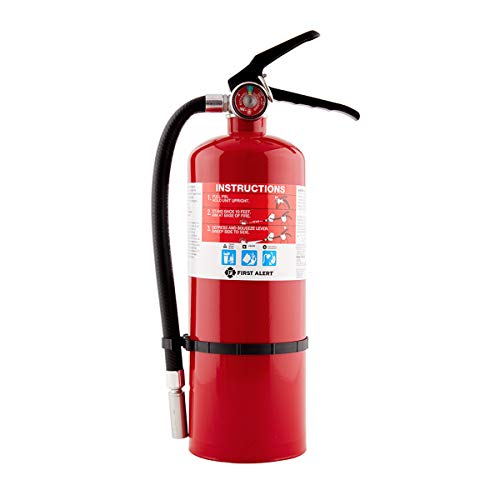
First Alert Fire Extinguisher, Heavy Duty for Home & Commercial Use
Included for 'Best Fire Extinguishers for Home Safety' because the listing specifies Heavy Duty for Home & Commercial Use, details this guide uses to compare options.
View on Amazon
Kidde Fire Extinguisher for Home, 1-A:10-B:C, Dry Chemical Extinguisher, Red, Mounting Bracket Included, 4 Pack
Included for 'Best Fire Extinguishers for Home Safety' because the listing specifies 1-A:10-B:C and Dry Chemical Extinguisher, details this guide uses to compare options.
View on Amazon
Kidde Kitchen + Home Fire Extinguisher Set, 711A | 1-A:10-B:C, RESSP+FA110G
Included for 'Best Fire Extinguishers for Home Safety' because the listing specifies 711A and 1-A:10-B:C, details this guide uses to compare options.
View on Amazon- Class A: Wood, paper, cloth, cardboard, and many plastics. Common in furniture, mattresses, curtains, and storage boxes.
- Class B: Flammable liquids such as gasoline, kerosene, paint thinner, solvents, and some oils.
- Class C: Fires involving energized electrical equipment. The agent must be nonconductive; disconnect power only if this can be done safely.
- Class D: Combustible metals, including magnesium and titanium. This is a specialist industrial requirement, not a normal household purchase.
- Class K: Commercial-style cooking oils and fats, including deep-fryer oils. This is the appropriate specialist class for serious residential cooking-oil risk.
For general household coverage, an ABC extinguisher is usually the most practical first purchase. Its dry chemical leaves a corrosive, difficult-to-clean residue, however, so avoid discharging it unnecessarily around electronics, upholstered furniture, and finished wood. Carbon-dioxide extinguishers leave little residue and work well for some electrical and flammable-liquid fires, but they provide no Class A rating and are less useful for smoldering fabric or wood.
How fire ratings and sizes affect the decision
| Typical size | Approximate total weight | Best placement | What to expect |
|---|---|---|---|
| 2.5 lb agent | About 4–5 lb total | Vehicle, RV, small apartment, bedside hallway | Compact, but short discharge time; suitable only for a very small, early-stage fire |
| 5 lb agent | About 8–10 lb total | Kitchen approach, bedroom corridor, living-area exit | A useful balance of reach, capacity, and manageable lifting for most adults |
| 10 lb agent | About 15–20 lb total | Garage, workshop, detached shed | More effective for larger hazards, but harder for children, older adults, and some users with limited grip strength |
Look for a readable pressure gauge, a tamper seal, clear operating instructions, and certification from a recognized testing organization such as UL. Rechargeable metal-cylinder models generally offer better long-term value than disposable units when the valve, hose, or cylinder remains serviceable. Check the manufacturer’s service instructions and local fire-code requirements; an extinguisher that has been discharged, damaged, or lost pressure needs professional attention or replacement.
Where to put extinguishers in a furnished home
Kitchen
Place an ABC extinguisher on the route out of the kitchen, commonly near the doorway or just outside the room. Add a Class K extinguisher if you regularly use a deep fryer or cook substantial quantities of oil. Do not mount an extinguisher directly over the stove, beside the oven, or next to a grease-filled appliance: a fire could make that location unreachable.
Allow a clear approach at least 30 inches wide in front of the mounting point. Keep it above the floor, visible, and away from cabinet doors that could be blocked by a table or counter extension. A small 5 lb unit often fits beside a pantry or on a wall near the kitchen entrance without sacrificing useful counter clearance.
Bedrooms and living rooms
Bedrooms do not usually need an extinguisher inside each room. A better location is the hallway or common area on the way to an exit, where smoke and flames are less likely to trap someone before the unit can be reached. For a 10-by-12-foot bedroom, keep beds, dressers, and baskets from narrowing the route to less than about 30–36 inches. Do not hide the extinguisher behind a wardrobe or media console.
One 2-A:10-B:C extinguisher on each occupied level is a reasonable baseline, with additional units where the home has a separate garage, workshop, or high-risk cooking area.
Garage and workshop
Mount a larger ABC extinguisher near the garage-to-house door or another exit, not directly beside a lawn mower, gasoline container, paint shelf, or battery-charging station. The position should remain accessible even if the workbench area is burning. Keep at least 3 feet of open working space around the extinguisher so stored tools and furniture cannot become an obstacle.
For flammable-metal work, welding, or specialized chemical storage, consult the hazard’s safety data and a fire-protection professional. A normal ABC unit is not a substitute for a Class D extinguisher where combustible metals are present.
Vehicle
Use a vehicle-rated extinguisher with a secure metal or heavy-duty bracket. Store it where the driver can reach it without leaving the vehicle if conditions permit, while ensuring it cannot become a projectile in a crash. Under a front seat can work only if the bracket does not interfere with seat movement or airbags. Otherwise, a firmly secured trunk or cargo-area mount is preferable to a loose extinguisher.
Mounting height and furniture clearance
Follow the label and local code first. As a practical home arrangement, mount the carrying handle roughly 3 to 5 feet above the floor, with the bottom about 4 inches or more above the floor. This keeps the unit visible and reduces damage from cleaning water or impacts. Do not place a heavy 10 lb model where someone must lift it above shoulder height.
For a wall-mounted unit beside furniture, leave roughly 6 inches of side clearance so the handle and hose can be grasped, and maintain a 30-inch-wide approach. Avoid mounting over a coat rack, behind a door that may swing shut, or beside a bookcase likely to be rearranged. Marking the location with a small fire-extinguisher sign can help guests and children identify it quickly.
Using one safely
Only attempt to extinguish a small, contained fire when everyone has been alerted, a clear exit is behind you, and emergency services have been called. Keep several feet away, pull the pin, aim at the base of the flames, squeeze the handle, and sweep from side to side. If the fire grows, smoke thickens, the extinguisher empties, or the exit becomes threatened, leave immediately and close doors behind you. Never fight a fire involving a trapped person, exploding containers, or rapidly spreading furnishings.
Bottom line
Choose a rechargeable 2-A:10-B:C ABC extinguisher for ordinary living areas, a larger 3-A:40-B:C or comparable unit for a garage, and Class K protection for serious cooking-oil hazards. The best extinguisher is the one that matches the fuel, remains visible and reachable, is securely mounted, and does not force you to move toward the fire to retrieve it.