
Key takeaways
- Cover the four patterns: Knee-dominant (squats, split squats), hip-dominant (bridges, hinges), abduction (lateral and rotational hip work), and ankle (calf and tibialis). A kit that skips one leaves a real gap, and the ankle pattern is the one most often missing.
- Buy around your grip, not your legs: If your grip fails before your quads, add a bench and ankle attachments rather than heavier dumbbells. Load applied to the limb or the torso sidesteps the bottleneck entirely.
- Check bench pad width: A 10 to 12 inch pad supports the shoulders for hip thrusts and stays stable for split squats. Narrower pads feel precarious as soon as you load them.
- Prioritise adjustability over maximum load: Fixed-resistance ankle bands feel challenging for a month and then stop progressing. Attachments that accept variable dumbbell weight keep working for years.
- Account for floor protection: Neoprene and rubber-coated weights are quieter and kinder to flooring than bare iron, which matters more than it sounds when you are doing floor-based hip work in a bedroom.
What's inside
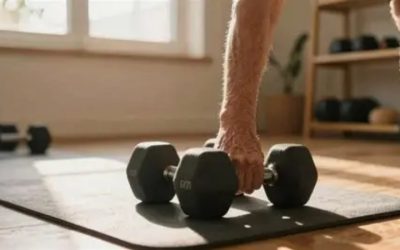
Leg training with dumbbells fails for a specific, mechanical reason: your legs are stronger than your grip. A set of goblet squats that would properly challenge your quads requires holding a dumbbell heavier than most people can comfortably grip, and long before your legs are tired your hands give out. This is why home leg days so often devolve into high-rep sets that burn but never actually load the muscle.
The way around it is not more weight — it is choosing tools that bypass the grip. Ankle cuffs and foot attachments transfer load directly to the limb, so hip abduction, hamstring curls and tibialis work can be loaded properly without your hands being involved at all. A bench lets you use split squats and hip thrusts where the load sits on the torso rather than hanging from the fingers. And a moderate pair of dumbbells covers everything in between. Assembled deliberately, a small kit covers every major lower-body movement pattern: knee extension, hip extension, abduction, and ankle dorsiflexion.
As an Amazon Associate we earn from qualifying purchases at no extra cost to you. Product prices and availability are accurate as of the date shown and are subject to change.

#1 Pick
#2 Pick

#3 Pick
#4 Pick

#5 Pick

#6 Pick

#7 Pick

Quick Comparison
| Product | Best For | Standout Feature | Watch Out For |
|---|---|---|---|
| Ayombo Ankle Resistance Bands | Hip abduction and kickbacks | Padded cuffs, no grip involvement | Band tension is fixed, not scalable |
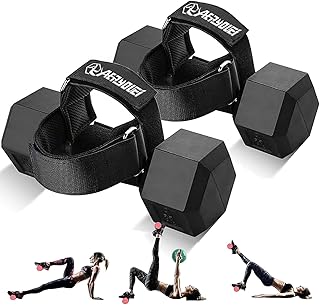
| Dumbbell Foot Attachment | Tibialis and hip flexor work | Turns a dumbbell into ankle load | Limited to smaller dumbbell heads |
| Dumbbell Lower-Body Converter | Loaded leg curls at home | Direct ankle loading, no machine | Requires a stable seat or bench |
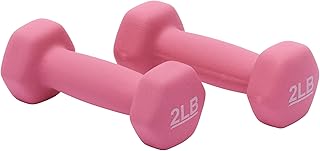
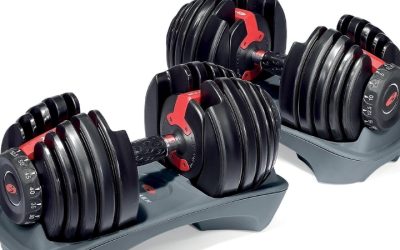
| Amazon Basics Neoprene Dumbbells | Light unilateral work | Non-slip coating, quiet on floors | Tops out too light for squats |
| Women’s Health Strength Guide | Programme structure | Ready-made progressions | Reference only, no equipment |
| YOLEO Adjustable Bench | Split squats and hip thrusts | 827 lb rating, folds for storage | Pad is firm for hip thrust comfort |
How to Choose
- Cover the four patterns: Knee-dominant (squats, split squats), hip-dominant (bridges, hinges), abduction (lateral and rotational hip work), and ankle (calf and tibialis). A kit that skips one leaves a real gap, and the ankle pattern is the one most often missing.
- Buy around your grip, not your legs: If your grip fails before your quads, add a bench and ankle attachments rather than heavier dumbbells. Load applied to the limb or the torso sidesteps the bottleneck entirely.
- Check bench pad width: A 10 to 12 inch pad supports the shoulders for hip thrusts and stays stable for split squats. Narrower pads feel precarious as soon as you load them.
- Prioritise adjustability over maximum load: Fixed-resistance ankle bands feel challenging for a month and then stop progressing. Attachments that accept variable dumbbell weight keep working for years.
- Account for floor protection: Neoprene and rubber-coated weights are quieter and kinder to flooring than bare iron, which matters more than it sounds when you are doing floor-based hip work in a bedroom.
Top Picks Reviewed
Best for Hip Work: Ayombo Ankle Resistance Bands with Cuffs
Padded ankle cuffs with band attachment points are the cheapest way to load hip abduction, kickbacks and standing hip flexion properly. Because nothing goes through your hands, you can train these patterns to genuine fatigue, which is exactly where most home leg routines fall short.
The limitation is progression. The bands come at fixed tensions, so once you outgrow the heaviest one your only option is buying more bands. Useful as a starting point and as a warm-up tool rather than a long-term loading solution.
Best for Ankle Strength: Dumbbell Foot Attachment and Tibialis Trainer
Tibialis anterior training is the most neglected area of lower-body work, and it is directly relevant to shin splints, ankle stability and knee health. This attachment clamps a dumbbell to your foot so you can load dorsiflexion progressively instead of doing endless unloaded reps.
Fit is the constraint. The clamp accommodates a limited range of dumbbell head sizes, and large hex or rubber-coated heads may not seat properly. Check the dimensions of the dumbbells you already own before ordering.
Best for Hamstring Work: Dumbbell Lower-Body Converter
Leg curls are almost impossible to load at home without a machine, and this attachment solves it by letting you hold a dumbbell with your feet. Seated or lying curls suddenly become a loaded exercise you can progress week to week.
You need a stable surface to work from. Perched on a dining chair the setup is awkward and the range is short, so this pairs best with an actual bench rather than improvised furniture.
Best Light Dumbbells: Amazon Basics Neoprene Hand Weights
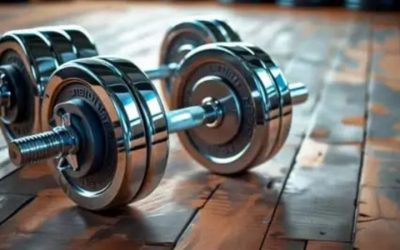
For lateral raises, light lunges, warm-up sets and holding position during single-leg work, these are exactly right. The neoprene coating grips well even with damp hands and does not damage flooring when set down.
They stop well short of what leg training needs. Neoprene dumbbells are made in light increments, so they will never be the tool that loads a squat or a hinge — they complement the rest of the kit rather than anchoring it.
Best Programming Resource: Women’s Health Strength Training Guide
Equipment without a plan produces the same three exercises repeated indefinitely. This guide lays out dumbbell-based progressions with sensible set and rep structures, which is genuinely the missing piece for a lot of home trainees.
It is a book, not equipment. Some of the programming assumes access to a broader weight range than a typical home setup provides, so expect to substitute exercises rather than follow it literally.
Best Foundation Piece: YOLEO Adjustable Weight Bench
A bench transforms what dumbbells can do for legs. Rear-foot-elevated split squats, hip thrusts, step-ups and single-leg hinges all become available, and all of them load the legs without depending on grip strength. The 827 lb rating and near-complete pre-assembly make it easy to live with, and it folds away between sessions.
The pad is firm. That is ideal for stability under load but less comfortable across the shoulders during high-rep hip thrusts, where a folded towel makes a noticeable difference.
Frequently Asked Questions
Can you really build legs with only dumbbells?
Yes, but you have to work around grip. Single-leg variations, tempo work, and exercises where the load sits on the torso or the limb rather than in your hands are what make it work. Straight bilateral squats with dumbbells hit a grip ceiling quickly.
What weight dumbbells do I need for legs?
Heavier than for upper body, but the practical answer is a pair you can hold for a challenging set of eight to twelve on a split squat. For most people that is well into the twenties or thirties in pounds — beyond that, add a bench and unilateral work instead of more weight.
Are ankle weights and cuffs safe for the knees?
For hip-driven movements like abduction and kickbacks, yes — the load acts on the hip, not the knee joint. Avoid heavy ankle loading during seated knee extensions with a long lever, which does place shear stress on the knee.
Do I need a bench, or can I use a chair?
A chair works for step-ups and basic split squats. It is not stable enough for hip thrusts or loaded single-leg work, and the fixed height is often wrong. If you plan to train legs seriously at home, the bench is the highest-value purchase here.
Final Thoughts
The YOLEO Adjustable Weight Bench is the piece that changes the most, unlocking split squats and hip thrusts that load the legs without punishing your grip. Pair it with the Ayombo Ankle Resistance Bands to cover hip abduction properly, and add the Dumbbell Foot Attachment if ankle and tibialis strength is a weak point — together they close the gaps that a pair of dumbbells alone always leaves.
Write Your Review
No reviews yet. Be the first to share your experience!