Key takeaways
- For a tight corner or beside a chair: A 1.6–2.5-cubic-foot compact refrigerator keeps a modest supply of drinks and snacks without taking much floor space. Check shelf layout before buying: some models fit cans more efficiently than tall bottles.
- For a game area or home bar: A glass-door beverage cooler makes it easy to see what’s inside and is designed around drinks rather than frozen food. Look for adjustable shelves, an interior light, and dimensions that leave room for the door to open fully.
- For a shared room with food and frozen items: A 3.1–4.5-cubic-foot refrigerator with a freezer compartment offers more flexibility. Its freezer is usually better for ice trays or a few frozen items than for stocking frozen meals for several people.
- For a quieter seating zone: Compare the manufacturer’s noise specification when available, and favor a model with a clearly stated decibel rating over one described only as “quiet.” Compressor refrigerators cycle on and off, so placement and ventilation matter as much as the label.
The best mini fridge for a man cave depends on what you’ll keep cold and how close the appliance will sit to the seating: choose a compact beverage cooler for cans within easy reach, or a larger freestanding refrigerator with a freezer if you need food storage too.
Best picks by man-cave setup
- For a tight corner or beside a chair: A 1.6–2.5-cubic-foot compact refrigerator keeps a modest supply of drinks and snacks without taking much floor space. Check shelf layout before buying: some models fit cans more efficiently than tall bottles.
- For a game area or home bar: A glass-door beverage cooler makes it easy to see what’s inside and is designed around drinks rather than frozen food. Look for adjustable shelves, an interior light, and dimensions that leave room for the door to open fully.
- For a shared room with food and frozen items: A 3.1–4.5-cubic-foot refrigerator with a freezer compartment offers more flexibility. Its freezer is usually better for ice trays or a few frozen items than for stocking frozen meals for several people.
- For a quieter seating zone: Compare the manufacturer’s noise specification when available, and favor a model with a clearly stated decibel rating over one described only as “quiet.” Compressor refrigerators cycle on and off, so placement and ventilation matter as much as the label.
Match capacity to the room, not just the head count
Capacity figures describe the interior, not the amount of usable shelf space. A fridge with a large advertised volume can still be awkward for wide cans, growlers, or snack containers if its shelves and door bins are fixed. Measure the largest items you plan to store, then check shelf width, height, and whether a shelf can be removed.

Icyglee 126 Can Mini Fridge, 3.2 Cu.Ft Beverage Refrigerator, Drink Cooler
Included for 'Best Mini Fridges for a Man Cave' because the listing specifies 3.2 Cu.Ft Beverage Refrigerator and Drink Cooler, details this guide uses to compare options.
View on Amazon
Electactic Mini Fridge 130 Can Beverage Refrigerator Cooler, 3.2 Cu.Ft Drink Fridge for Soda Wine Beer, Adjustable Temperature Control for Home Office, Black
Included for 'Best Mini Fridges for a Man Cave' because the listing specifies 3.2 Cu.Ft Drink Fridge for Soda Wine Beer and Adjustable Temperature Control for Home Office, details this guide uses to compare options.
View on Amazon
EUHOMY 130 Can Mini Fridge, Beverage Refrigerator with Glass Door, Black
Included for 'Best Mini Fridges for a Man Cave' because the listing specifies Beverage Refrigerator with Glass Door and Black, details this guide uses to compare options.
View on Amazon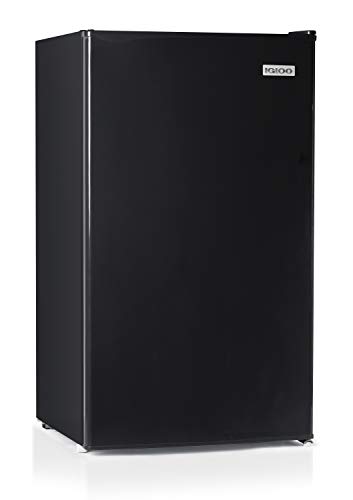
Igloo 3.2 Cu.Ft. Mini Fridge with Freezer - Single Door Compact Refrigerator with Glass Shelves for Homes, Dorms & Offices- Keep Snacks, Drinks & Frozen Foods Cool with Temperature Control Mini Fridge
Included for 'Best Mini Fridges for a Man Cave' because the listing specifies Dorms & Offices- Keep Snacks, details this guide uses to compare options.
View on AmazonFor a 10-by-12-foot room, a compact unit around 18–20 inches wide can often fit along a wall without dominating the layout, provided it does not block a walkway or crowd a recliner. In a smaller room, a narrow beverage cooler may be a better fit than a deeper refrigerator. Consider the door swing: a fridge pushed against a wall may not open far enough to remove shelves or reach the back.
| Room use | Useful capacity range | Typical footprint to plan for | Best fit |
|---|---|---|---|
| One chair or desk, drinks only | 1.6–2.5 cu. ft. | About 17–20 in. wide by 18–21 in. deep | Compact refrigerator or small beverage cooler |
| Home bar or game station | 3–5 cu. ft. | About 18–22 in. wide by 19–23 in. deep | Drink-focused cooler or refrigerator with flexible shelves |
| Shared lounge, snacks and frozen items | 4–7 cu. ft. | About 20–24 in. wide by 21–25 in. deep | Freestanding refrigerator with a separate freezer section |
These are planning ranges, not dimensions for a particular model. Always use the product’s listed measurements, then add clearance for ventilation, the plug, and door movement. Many compact fridges need several inches around the sides or back; follow the manual, since clearance requirements vary. Don’t tuck a compressor model tightly into a cabinet unless it is specifically designed for built-in installation.
Beverage cooler or mini fridge with a freezer?
Choose a beverage cooler when drinks are the priority
A beverage cooler typically offers shelves arranged for cans or bottles, a glass door, and a display-friendly layout. That can be convenient beside a pool table or gaming setup, where you want to see the options without leaving the room. The trade-off is that drink coolers may have less flexibility for food, and their temperature range may not suit every perishable item. Check the stated operating range rather than assuming every model can safely store all foods.
Choose a refrigerator-freezer when versatility matters
A separate freezer compartment is useful for ice, a small frozen pizza, or a few treats. On many compact models, however, it is a small compartment rather than a full-width freezer. It may not hold a steady temperature as well as a full-size freezer, and frost can reduce usable space. If frozen food storage is important, check the freezer’s dimensions and temperature guidance—not just the fridge’s total cubic footage.
Some compact refrigerators use one cooling system for both sections. That can mean temperature compromises, especially if you frequently open the door or pack the fridge tightly. Keep air vents inside the cabinet clear, and don’t overload shelves to the point where cold air cannot circulate.
Noise, placement, and everyday access
For a fridge next to a sofa, recliner, or desk, a steady low hum and occasional compressor startup may be noticeable during quiet scenes or calls. Look for a published noise figure, but treat it as one comparison point: room acoustics, floor type, and vibration also affect perceived sound. A hard floor can transmit compressor vibration, while an uneven surface can cause rattling. Adjust the feet until the unit sits level, and avoid placing it where its sides or back touch furniture.
Leave a clear path to the door and keep drinks within comfortable reach without making the fridge a trip hazard. A useful setup is a fridge beside a side table rather than directly between seats. If it will sit by a gaming desk, measure the distance between the desk and chair with the chair pulled back; a fridge door that opens into that zone can make the area frustrating to use.
| Placement check | Practical target | Why it matters |
|---|---|---|
| Walkway beside the fridge | Aim for about 30–36 in. of clear passage where people regularly walk | Reduces collisions and keeps the route usable when someone is reaching for a drink |
| Space above a low fridge | Measure the top against the seat or side table; a surface near 18–24 in. high may be convenient beside many chairs | Helps the fridge fit the furniture rather than leaving an awkward, hard-to-reach top |
| Door opening | Allow the full swing plus room to remove shelves and bins | A wall or cabinet can prevent the door from opening wide enough for cleaning |
| Ventilation | Use the manufacturer’s specified clearance; several inches may be required | Restricted airflow can impair cooling and make the compressor work harder |
Dimensions and clearances should be verified against your chosen model. The listed width and depth also may not include the handle, hinge, or space needed for the power cord.
Buying checklist before you order
- Measure the route in: Check the doorway, hallway turn, stairs, and final position—not just the open floor area. Compare those measurements with the boxed dimensions if delivery is involved.
- Check carrying weight: Compact fridges can be awkward to lift even when their listed weight seems manageable. Plan for two people to move a heavier unit, especially on stairs, and keep it upright as directed in the manual.
- Confirm the outlet: Use a grounded outlet as specified by the manufacturer. Avoid extension cords unless the manual explicitly permits one, and keep the cord away from the fridge’s hot or moving parts.
- Think about cleaning: Removable shelves and a smooth interior make spills easier to handle. A glass door shows fingerprints, while a solid door hides contents but may be easier to keep looking tidy.
- Compare running costs: Check the energy label or annual energy-use information where available. A fridge that runs all day adds a continuing cost, even if its purchase price is low.
What should you spend?
Basic compact refrigerators are often in the general range of $100–$250, while larger or better-equipped models commonly run about $200–$500. Beverage coolers vary widely with capacity, finish, and temperature controls, with many household options around $150–$600. These are broad market ranges, not guarantees; features, size, and availability change. Spend extra for a layout that fits your drinks, dependable temperature controls, or a quieter placement—not merely a bigger capacity number.
For most man caves, the best choice is the smallest model that comfortably holds a typical evening’s drinks plus a little overflow. If the unit will sit beside the seating, prioritize a manageable footprint, door clearance, and noise information. If it will serve a bar or game area, choose shelves suited to cans and bottles. Add a freezer compartment only when you’ll use it enough to justify the extra space and its limitations.