Our Top Picks
 Barossa Design Heavy Duty Shower Curtain Liner with72"W x 72"L (Pack of 1)72 x 72 x 0.01 inchesCheck on Amazon
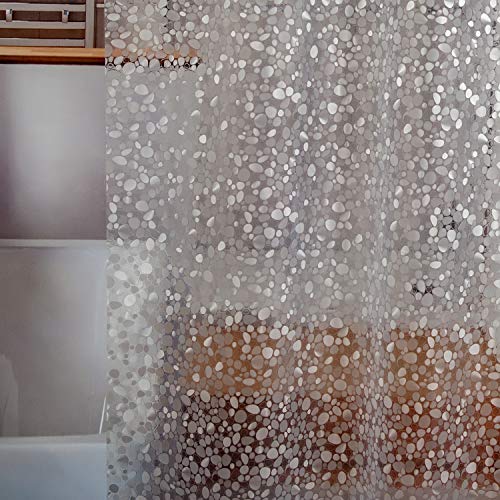 Bostofy Waterproof Shower Curtain Liner 8G EVA Thick72"W x 72"L (Pack of 1)1.2 poundsCheck on Amazon
Pick a magnetic-hem polyester or heavy PEVA/EVA liner if your main complaint is a curtain that billows inward and clings to your legs, choose a fabric liner with a sewn-in chain or weighted hem if you want a quieter, softer feel that goes in the washing machine, and choose a stall-size liner only if your shower is the narrow 54-inch type. A weighted liner works by adding mass or magnets along the bottom hem so the curtain hangs straight and resists the pull of rising warm air in the shower. The right choice depends on liner material, hem weight, size and how much cleaning you are prepared to do.
At a glance: weighted liner types compared
| Liner type | Best for | Typical stated features | Limits |
|---|---|---|---|
| Magnetic-hem PEVA/EVA | Steel or cast-iron tubs where the hem can grip the tub wall | Magnets sewn or sealed into the bottom hem, mildew-resistant coating, grommets or reinforced header | Magnets do nothing on acrylic or fiberglass tubs; plastic can hold odour if never aired out |
| Fabric (polyester) with weighted hem | Shoppers who want a soft, drapey liner that can be laundered | Water-repellent finish, chain or weight discs in the hem, machine-washable | Needs to dry fully between showers; water-repellent finish can wear down with washing |
| Heavy-gauge vinyl or PEVA with suction cups | Walk-in or stall showers with a smooth wall to grip | Higher thickness rating, suction cups at the sides, weighted hem | Suction cups fail on textured tile or dirty walls |
| Fabric liner with clear window panel | Showers where you want to see the stall or a decorative outer curtain | Mesh or clear PEVA sections, weighted hem | Mesh sections can let spray through; more seams to clean |
| Extra-long or wide liner | Tubs with a high rod, clawfoot tubs, wider openings | Sizes such as 72 by 78 or 108 by 72 inches are commonly offered | Hard to find in every material; check hem clearance above the floor |
How weighted hems actually work
Most shower curtain “billow” comes from the way hot water warms the air inside the tub area. The warm air rises, and cooler air is pulled in from below, pushing a light liner toward you. A weighted liner fights this in one of two ways. Magnets let the hem snap against a metal tub wall. A chain, weight discs or a thick folded hem add mass so the bottom edge stays put. Several makers, including Zenna Home, Gorilla Grip, Barossa Design and Utopia Home, list weighted or magnetic hems among their liner features, and the exact count of magnets or the weight of the chain varies from maker to maker. Read the product listing for the specifics of the model you are considering rather than assuming all weighted liners are the same.

AmazerBath Heavy Duty Shower Curtain Liner 12 Gauge, 72 x 72 Inches Clear Shower Curtain Liner with 3 Clear Stones and 12 Grommet Holes, Weighted Plastic Shower Liner
Chosen because it specifies Weighted Plastic Shower Liner.
View on Amazon
Amazer White Shower Liner Cloth Waterproof, White Shower Curtain Liner Fabric with Weighted Stones, Washable Shower Curtain and Liner 2-in-1, 120G Heavy Duty, 12 Grommet Holes, 72 x 72 Inches
Chosen because it specifies White Shower Curtain Liner Fabric with Weighted Stones and Washable Shower Curtain and Liner 2-in-1.
View on AmazonBarossa Design Heavy Duty Shower Curtain Liner with 6 Magnets, Clear, 72x72 | 8G Thick PEVA, 6 Bottom Magnets, Waterproof Vinyl & See Through, Metal Grommets, Plastic Shower Curtain for Bathroom
Chosen because it specifies Clear and 72x72.
View on AmazonBostofy Waterproof Shower Curtain Liner 8G EVA Thick Shower Curtain with Heavy Duty 3 Bottom Magnets, Shower Liner for Shower Stall, Bathtubs, 3D Pebble Pattern, 72 x 72,12 Hooks
Chosen because it specifies Shower Liner for Shower Stall and Bathtubs.
View on AmazonIt is worth noting that a weighted hem reduces billowing but does not eliminate it. A very light, thin liner with a small weight may still drift in a high-pressure shower with a strong hot flow. Thicker material and a heavier hem tend to perform better, but they also add bulk and can feel stiff when you push the curtain aside.
Material: PEVA, EVA, vinyl and polyester
PEVA and EVA
PEVA and EVA are chlorine-free plastics, widely marketed as alternatives to traditional PVC vinyl. Makers often describe them as lower in odour and more eco-friendly than PVC, though the claim depends on the exact product and any certifications the maker supplies. Reviewers generally report that these liners feel lighter than thick vinyl and can have a mild new-plastic smell that fades after airing. They are easy to wipe down, and many are sold with a mildew-resistant treatment. Because they are thin by nature, the weighted hem is what gives them their stability.
Heavy vinyl
Gauge-rated vinyl liners, sometimes listed at a higher “G” thickness, hold their shape well and resist billowing even before you add magnets. They can be stiffer and are less breathable, so they need regular rinsing and drying. If you are sensitive to plastic odours, ventilate the bathroom for several days after unpacking.
Polyester fabric
Fabric liners feel more like a cloth curtain. Makers often state that the fabric is water-repellent or water-resistant rather than fully waterproof, which means the liner can be machine-washed but may eventually let some moisture through if the finish wears out. Some fabric liners include a chain or weighted discs sewn into the hem. They tend to hang better than thin plastic and can be run through a gentle wash cycle according to the care label, which is the main advantage over plastic.
Size and fit notes
Standard shower liners are commonly sold at 70 by 72 inches or 72 by 72 inches for a regular tub. Extra-long versions around 72 by 78 inches suit curtain rods mounted higher than average, and a stall liner of roughly 54 by 78 inches is made for narrow stall showers. Measure from the rod or hooks to where you want the hem to sit, and subtract a few inches so the bottom edge hangs inside the tub rather than over the rim. Many bathroom guides suggest the hem should end a few inches above the tub floor so it does not sit in standing water.
Also check the header. Some liners use grommets and rings, while others use a reinforced strip with button holes. If your rod is spring-loaded and you hang the liner and the decorative curtain on the same rod, make sure you have enough width and that the weight of the two layers does not pull the rod down.
Care and safety notes
- Follow the maker’s care label. Fabric liners are often machine-washable, but plastic liners may be hand-washed or wiped and should not be put in a dryer unless the label allows it.
- Rinse the hem and magnets periodically. Soap film and mildew collect in the fold, and trapped moisture is what causes odour.
- Spread the liner open after each shower so it dries evenly instead of bunching.
- Magnets are small, sealed items. If you have young children or pets, check that the hem is intact and replace the liner if the stitching or seal opens up.
- Do not rely on a magnetic hem as a stabiliser on a non-metal tub. It will not hold on acrylic or fiberglass.
- If a liner shows persistent black mould that does not clean off, replace it rather than scrubbing at it aggressively.
Trade-offs by budget tier
Budget
Entry-level liners usually use thinner PEVA or light polyester with a basic weighted strip or a few magnets. They are fine for a guest bath or a low-use shower, but reviewers often report they may billow more, crease and wear out in a year or two. If you pick this tier, a liner with at least a few magnets or a chain is better than none.
Mid-range
Mid-range options from brands such as Zenna Home, Gorilla Grip and Barossa Design commonly offer thicker material, more magnets, reinforced grommets and mildew-resistant finishes. This is the practical sweet spot for a daily-use family bathroom, because the added thickness gives the hem something to hold on to.
Premium
Premium liners tend to be heavier fabric or heavy-gauge vinyl with hotel-style construction, heavier hems and stronger stitching. They cost more but may last longer and keep their shape. They also take up more space when folded and can be heavy when wet, so check that your rod can support them.
Pick X if…
| Pick this | If you… |
|---|---|
| Magnetic-hem PEVA/EVA liner | have a steel or cast-iron tub and want the hem to stay against the wall |
| Weighted fabric liner | prefer a soft feel and want to machine-wash the liner |
| Heavy vinyl liner with suction cups | have a stall shower with a smooth wall and dislike curtain billow |
| Extra-long liner | have a high rod or a deep tub |
| Liner with a window panel | want to see in the shower area or pair it with a decorative curtain |
| Stall-size liner | have a narrow shower around 54 inches wide |
Alternatives to consider
- Stand-alone shower curtain weights: Small magnetic or adhesive weights that attach to a liner you already own. They are a cheaper fix, though they are less tidy than a hem built in at manufacture.
- Glass shower door or screen: A permanent option that removes the billow problem entirely, though it needs installation and more regular glass cleaning.
- Double-rod or tension-rod setup: A second rod can hold the liner closer to the tub wall, which helps reduce the drift of a lightweight liner.
What reviewers and makers tend to agree on
Across consumer guides and maker descriptions, a few themes keep appearing. Thickness matters more than the number of magnets, because a thin liner can ripple even with a strong hem. Mildew-resistant finishes reduce but do not stop mould, so ventilation and drying still count. And no liner stays new forever: expect to replace one every year or two depending on water hardness and how often you clean it. Treat any marketing claim of a lifetime liner with caution, and rely on the stated materials and care instructions instead.
Frequently Asked Questions
Do magnetic shower curtain liners work in any tub?
No. Magnets need a ferrous metal surface, so they work on steel or cast-iron tubs and some metal shower frames. They will not hold on acrylic, fiberglass or tile. In those bathrooms, look for a chain or disc weighted hem or a heavier material instead.
Is a heavier liner always better?
Not always. A heavier hem helps keep the liner straight, but very heavy fabric can strain a spring-loaded rod and feel awkward to move. Aim for enough weight to hang straight without overloading the rod, and check the maker’s size and weight notes.
Can I machine-wash a weighted liner?
Many fabric liners can be washed on a gentle cycle, but you should follow the care label. Plastic liners and those with magnets may need hand-washing or wiping. Dryers can damage plastic and loosen hems, so air-drying is safer unless the label says otherwise.
How do I stop my liner from smelling?
New plastic liners often have a smell that fades when aired out. After that, odour usually comes from trapped moisture and soap film. Spread the liner after showers, ventilate the room and clean or replace the liner when mould appears.
What size liner do I need?
Standard tubs commonly use 70 by 72 or 72 by 72 inch liners. Choose extra-long if your rod is higher than usual, and a narrower stall size for stall showers. Measure your rod height and the width of the opening before buying.
How often should I replace a shower liner?
There is no fixed rule. Plan on replacing it when you see staining that will not clean off, cracked plastic, a weakened hem or persistent odour. Many households replace liners every year or two, depending on use and water conditions.