Key takeaways
- Learn why countertop ice turns small, thin or cloudy and how water temperature, scale, airflow, settings and storage affect each batch.
Small, thin or cloudy ice does not automatically mean a countertop ice maker is broken. Bullet-style machines intentionally freeze water around chilled metal fingers, and rapid freezing can trap air and dissolved minerals. Cube size also changes with water and room temperature, cycle settings, airflow and scale. The useful question is whether the ice has always looked this way or has recently become smaller, softer or more opaque.
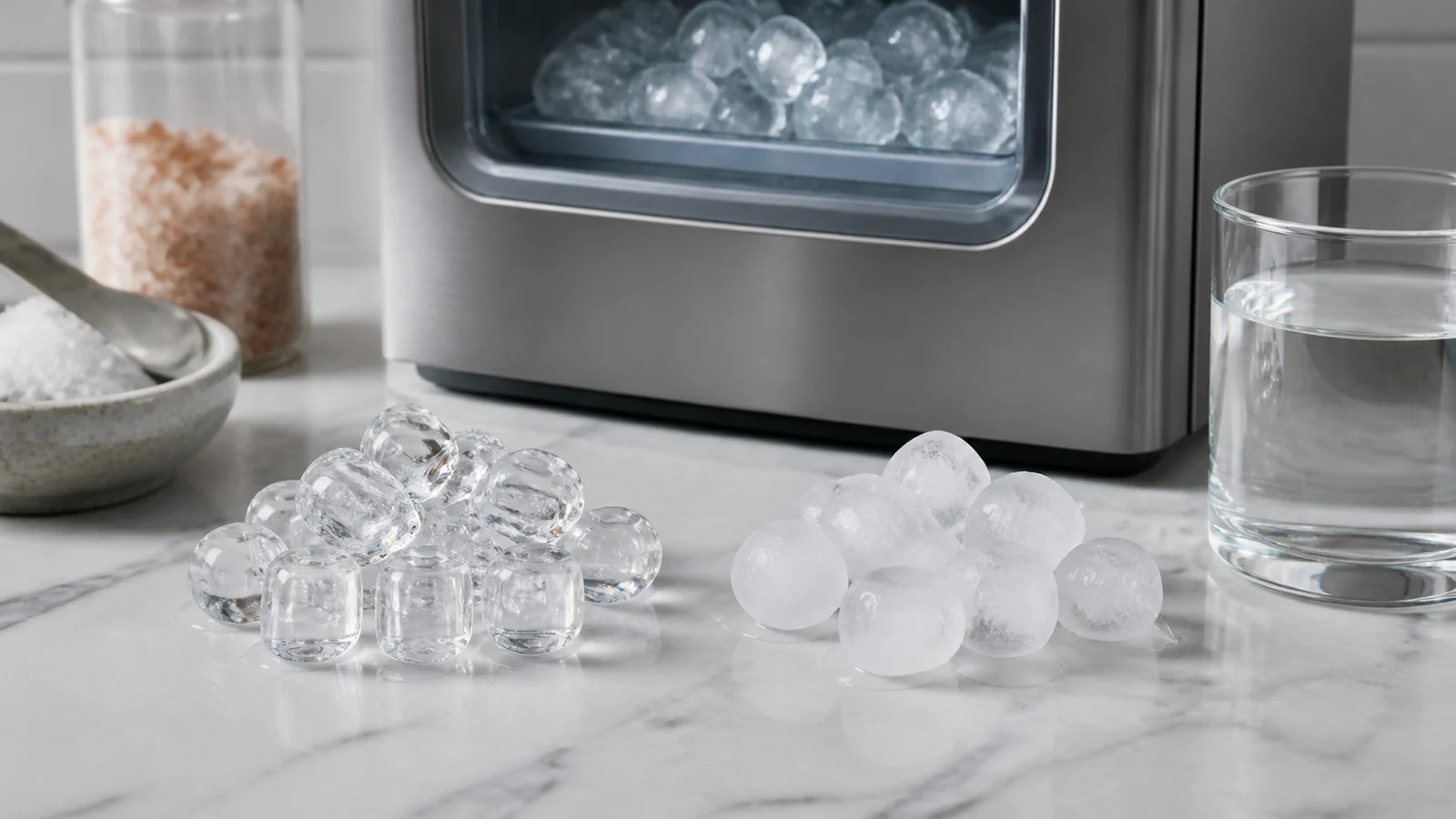
Use this guide to separate normal countertop-ice characteristics from maintenance or service symptoms. Follow the exact machine manual whenever its instructions differ.
Our top picks
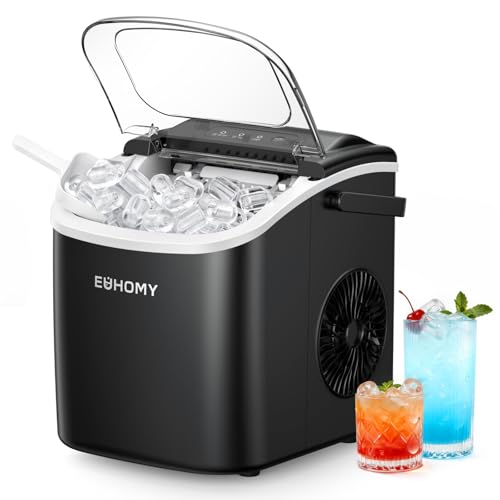


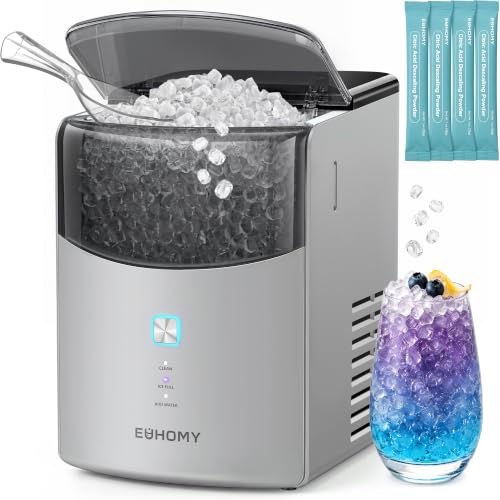
As an Amazon Associate we earn from qualifying purchases at no extra cost to you.
First, define the change you are seeing
Place a fresh batch on a clean plate and compare it with a photo from a normal batch, if available. Look for:
- Uniform but smaller pieces across the whole batch.
- Thin shells that collapse quickly.
- White centers with clear outer edges.
- Chalky film on the surface or in the reservoir.
- Uneven pieces from one freezing finger to another.
- Normal pieces at startup that shrink after sitting in the basket.
Uniform changes usually point to settings or operating conditions. One consistently bare or misshapen position may suggest local scale, poor water flow or a component problem. Ice that looks normal when harvested but later shrinks is often melting in an insulated basket rather than being held in a freezer.
Why fast ice is often cloudy
Water contains dissolved gases and, depending on the source, dissolved minerals. As water freezes, the crystal structure tends to exclude many of those substances. In a fast, small appliance cycle, bubbles and concentrated minerals can become trapped before they escape, creating a white or cloudy center.
This appearance is usually cosmetic when potable water is used and the appliance is clean. Clear commercial-style cubes often depend on controlled directional freezing, longer cycles or different equipment. A portable bullet-ice maker is optimized for convenience and repeated production, not necessarily optical clarity.
Do not use cloudiness alone as a water-safety test. Water can look clear and still be unsuitable, while safe potable water can make cloudy ice. If the source water has an unusual odor, color or official advisory, stop using it and follow guidance from the local water authority. The FDA treats ice as food, which is a useful reminder to use safe water, clean utensils and food-safe storage.
Water temperature changes ice thickness
Warm incoming water takes longer to reach freezing temperature. In a timed cycle, that can produce thinner shells or smaller pieces. Use potable water within the temperature range in the manual. Do not add boiling water, and do not add ice or nearly frozen water unless the manufacturer permits it.
Let water from a very warm tap cool appropriately before filling. Conversely, excessively cold water can change harvest timing or cause pieces to fuse on some designs. Consistency matters: compare batches using the same safe water source, fill level and size setting.
Room heat and blocked ventilation matter
The appliance must move heat from the water into the surrounding air. A hot kitchen, direct sunlight, an oven nearby or restricted vent clearance makes that job harder. The result can be slower production, soft pieces and increased meltback.
Place the machine on a level, stable counter with the clearance specified in its manual. Keep external vents free of dust and objects. Never enclose a portable unit in a cabinet unless it is designed for built-in installation. After moving it to a cooler, ventilated location, allow enough time for operating temperatures to stabilize before comparing ice.
Confirm the ice-size setting
Many bullet machines offer small and large selections. The setting usually changes freeze time rather than creating a fundamentally different shape. Someone may have changed it during cleaning or after a power interruption.
Select the desired size and observe multiple complete batches. The first batch after startup may be less representative because internal parts and reservoir water have not stabilized. If large and small settings produce exactly the same result under normal conditions, consult the troubleshooting section of the manual rather than assuming the button has failed.
Budget machines can still make useful everyday ice, but expectations should match their design. Our guide to countertop ice makers under $100 explains how bullet shape, basket behavior and operating conditions affect practical output.
Mineral scale can reduce heat transfer and water flow
Hard-water deposits can coat the reservoir, pump path, freezing surface or sensors. Scale may interfere with water circulation and thermal contact, leading to uneven or progressively smaller ice. A chalky line around the reservoir or rough film on accessible surfaces is a useful clue.
Run only the descaling procedure and product approved for the exact model. Unplug before hand-cleaning removable parts, avoid abrasive tools, rinse completely and discard post-cleaning batches as instructed. The complete countertop ice maker cleaning process covers accessible surfaces, rinse discipline and drying.
Never scrape the freezing fingers with metal. A scratch can damage a surface, and a puncture can release refrigerant. If hard deposits do not clear with the authorized method, contact the manufacturer.
Water source can change appearance and taste
Changing from one potable source to another may alter mineral content, alkalinity and dissolved gas, all of which can affect clarity. A manufacturer-approved filter may reduce sediment, chlorine taste or some scale-forming material, but not every filter treats every constituent. Replace cartridges on their documented schedule and flush new ones as directed.
Distilled, demineralized or reverse-osmosis water is not automatically correct for every ice maker. Some appliances use conductivity-based water sensors that may not behave as intended with very low-mineral water. Use the water specification in the manual. If it is silent, ask the manufacturer before making a permanent change.
Poor circulation can make pieces uneven
With the unit unplugged, inspect accessible openings and the reservoir for debris. Reseat the basket, drain plug and water tank. During a normal cycle, observe whether water flows evenly over the authorized visible area without reaching inside.
Weak flow may result from low water, air in a recently drained system, scale or a pump issue. Follow any model-specific priming procedure. Do not blow compressed air into the water path or force water through a port; pressure can dislodge tubing or contaminate the system.
If one freezing position repeatedly produces no ice after correct cleaning, document it with photographs and contact support. That pattern is less likely to be explained by general room temperature.
Meltback can look like poor production
Most portable countertop machines do not contain a refrigerated storage bin. Insulation slows melting, then water often returns to the reservoir for reuse. Ice left in the basket becomes smaller, wetter and more fused even if it was properly formed at harvest.
Transfer finished ice promptly to a freezer-safe container if you need to store it. Break up pieces before freezing only with clean utensils and in a manner compatible with food-safety guidance. Do not judge production by the basket hours later; observe freshly released pieces.
Cloudy ice versus scale, slime and contamination
Cloudiness inside a fresh piece is different from residue on the machine. Stop production and clean the unit if you see a slippery film, colored growth, debris, persistent off-odor or residue floating in water. Discard affected ice. If contamination may involve unsafe source water, follow local public-health directions rather than relying on an appliance cleaning cycle.
White flakes in melted ice can indicate mineral scale breaking loose, but identification by appearance is uncertain. Drain, clean and rinse according to the manual. If flakes persist after correct maintenance, contact the maker and consider having source water evaluated by an appropriate laboratory.
Nugget, bullet and crushed ice are not interchangeable
Bullet ice is hollow or rounded because it forms around cold fingers. Nugget or pebble ice is made through a different process that produces small, chewable pieces. Crushed ice is mechanically broken from larger ice. Texture, opacity and melt rate naturally differ.
If your real goal is soft, chewable ice, changing the water in a bullet machine will not turn it into a nugget machine. This crushed and nugget ice maker overview helps clarify the category before replacing a working appliance.
A controlled comparison test
After cleaning and restoring normal placement, test without unsafe modifications:
- Use the normal potable water source and correct fill level.
- Record room and water conditions without exceeding manual limits.
- Select one ice-size setting.
- Let the machine complete several batches.
- Photograph fresh pieces immediately after harvest.
- Repeat on the other size setting if available.
Change only one variable at a time. This does not reproduce a laboratory test, but it can show whether a setting, heat or overdue cleaning correlates with the symptom.
When small ice suggests service is needed
Seek support when pieces become progressively thinner despite correct cleaning and conditions, water circulation is visibly uneven, the compressor or fan repeatedly starts and stops, an error code persists, or the unit leaks. Unplug immediately for electrical odor, a hot or damaged plug, repeated breaker trips or water near electrical parts.
Do not open the sealed cabinet to inspect refrigerant lines, controls or wiring. Provide support with the model, serial number, water source, maintenance history, room conditions, error pattern and photographs of consecutive batches.
Frequently asked questions
Will boiled water make perfectly clear ice?
Not reliably, and adding hot water can violate operating instructions. Clarity depends on freezing direction, speed, dissolved substances and gas. Use potable water at the temperature allowed by the manufacturer.
Does a water filter always prevent cloudy ice?
No. A filter’s effect depends on its certified purpose and the substances in the water. It may improve taste or reduce sediment without removing all hardness or dissolved gas. Cloudiness can remain normal.
Why is the first batch smaller?
The machine, reservoir and water may still be warm at startup. Compare later batches within the timing and conditions specified by the manual. Persistent deterioration is more significant than one initial batch.
Bottom line
Small or cloudy countertop ice is often a product of rapid freezing, warm conditions, settings or normal meltback. Start with clean equipment, correct water, clear vents and fresh-batch observation. Treat surface residue, odor, persistent uneven formation or electrical symptoms as separate warnings, and never trade safe manufacturer instructions for a clear-ice shortcut.