Key takeaways
- Compare direct-plumbed, reservoir and gravity-tank countertop ice makers by installation, refill work, leaks, drainage, cleaning and rental fit.
A water-line countertop ice maker refills from a documented pressurized potable-water inlet. A reservoir machine is filled by hand, while a gravity side tank extends reservoir capacity without becoming household plumbing. These distinctions affect installation, leaks, cleaning, renter suitability and daily convenience. They do not determine ice quality by themselves. This specification-based comparison explains the decision without claiming that any untested model performs best.
Editorial system illustration, not product photography or installation approval.
Our top picks

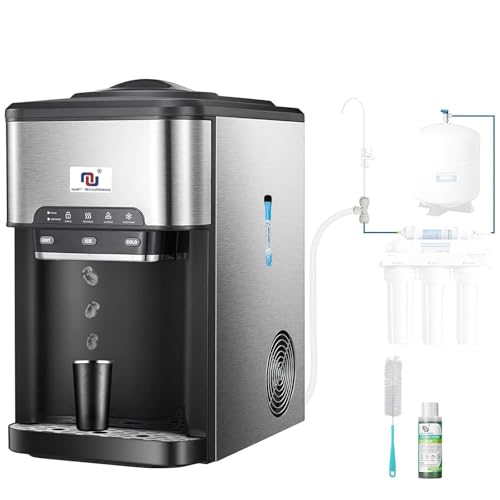

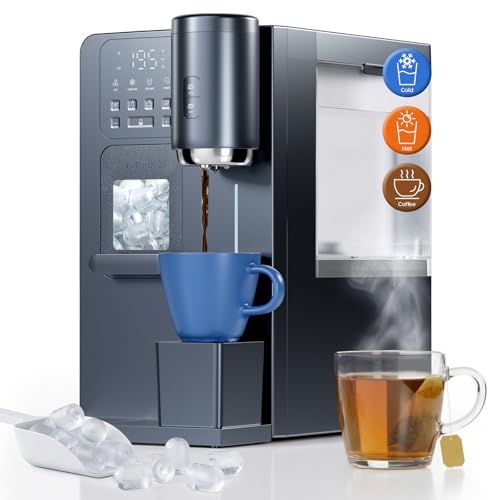
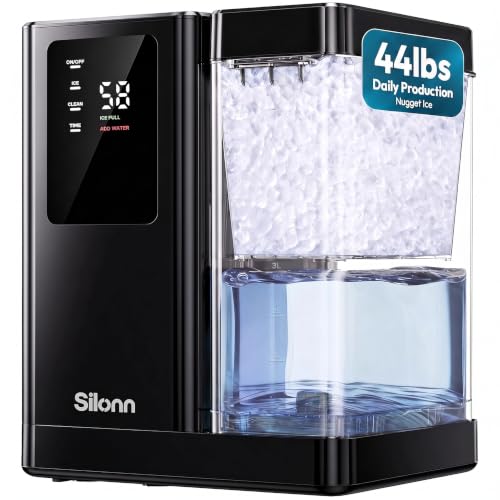


As an Amazon Associate we earn from qualifying purchases at no extra cost to you.
The three configurations
Direct-plumbed machines connect to a cold potable-water line through the inlet, tube and valve specified in the exact manual. The supply remains available, so the machine can refill automatically. A permanent connection needs compatible pressure, an accessible shutoff, leak testing and possibly a qualified plumber.
Built-in reservoirs are filled through a lid or removable tank. They require no household water connection and can be moved after draining. Capacity is limited, but the user controls the water source and can inspect each refill.
Gravity side tanks are refillable accessories positioned beside or above the machine. They feed water without household pressure. GE’s Opal side-tank instructions, for example, describe a hand-filled tank connected through tubing. Calling that setup “plumbed” misleads buyers who expect automatic supply from a shutoff valve.
Some models can draw from a jug with a small pump. Treat this as a fourth manufacturer-defined mode, not evidence that a pressurized line is acceptable.
Decision table
| Priority | Direct water line | Reservoir or side tank |
|---|---|---|
| Frequent daily production | Less refill work | Requires planned refills |
| Rental or temporary use | Often unsuitable without permission | Usually easier to place and remove |
| Installation | Plumbing and leak checks | Fill, level and plug in |
| Water-source changes | Fixed to connected supply | Easy to use another potable source |
| Leak exposure | Continuous supply can increase consequence | Limited to water currently loaded |
| Cleaning | Supply path plus machine | Tank, valve and machine |
| Portability | Low after installation | Higher after draining |
| Counter layout | Needs safe tube routing | Needs refill and tank clearance |
The table describes architecture, not every product. Manuals override general expectations.
Direct connection: convenience with prerequisites
Automatic refill is valuable in an office, entertaining space or household that consumes ice repeatedly. It prevents an empty reservoir from interrupting production. However, convenience begins only after installation is correct.
The exact model must state inlet pressure, tube dimensions, fitting type, water temperature and permitted filter. Household pressure is not universal. Too much can stress a valve; too little can cause incomplete fills. Do not connect a hose because its diameter appears to fit.
An accessible shutoff should isolate the appliance without shutting water to the whole home. Local code determines acceptable valves, backflow protection and who may install the line. Route tubing away from heat, sharp edges and moving drawers. Leave enough slack for service without creating a loop that can kink.
Continuous supply changes leak planning. A tray may protect a finish from drips but cannot contain an open line. An approved automatic shutoff or leak sensor may reduce consequences, but neither replaces inspection and compliant fittings.
Reservoir: simpler but not maintenance-free
A reservoir machine suits renters, occasional users and counters far from plumbing. It can be stored after an event and lets the owner use a chosen potable-water source. The trade-off is repeated filling, especially when advertised daily production greatly exceeds tank volume.
Reservoir size is not ice-bin size. Water capacity affects how often the machine can run; bin capacity affects how much finished ice it holds at one time. Most countertop bins are insulated rather than refrigerated, so ice melts. The machine may recycle meltwater, but that does not make it a freezer.
Hand filling creates opportunities for contamination from pitchers, hands and an open lid. Use a clean food-safe container and potable water. Do not top off indefinitely. Drain and clean on the schedule in the manual, and more cautiously after long storage or contamination.
Side tank: useful middle ground
A gravity tank can extend time between refills without altering household plumbing. It is often the practical choice for a renter who wants more capacity but cannot install a valve. The accessory still requires counter width, stable placement and cleaning.
Confirm that the side tank is approved for the exact machine revision. A similar hose does not establish compatibility. Keep the tank at the required height and do not block vents. Wash the reservoir, cap, valve, base and tubing according to manufacturer instructions; small wet components can retain residue.
The tank remains manually filled. Marketing phrases such as “continuous water” should not be interpreted as continuous household supply unless the manual explicitly says so.
Drainage is independent of refill type
A machine can have a direct inlet yet require manual draining. Another may use an internal meltwater loop. Commercial-style countertop units may require gravity or pumped drainage. Check the manual rather than assuming that an inlet and drain arrive together.
Gravity drains require downhill routing and a permitted destination. A hose that rises or sags can retain water. Plumbing codes may require an air gap or other protection against contamination. Pumped drains have maximum lift and maintenance limits.
For drain-free units, learn how to empty the machine before moving or storage. Never tip a plugged-in appliance to remove water. Our installation and cleaning checklist separates supply, drain and sanitation steps.
Water quality and filters
Both systems require potable water. A direct line does not make water cleaner, and a reservoir does not make bottled water automatically suitable for the machine. Follow hardness and water-quality limits when published. Scale can reduce heat transfer and obstruct valves, while very low-mineral water may behave differently in sensing or ice formation.
Use only filters approved for the model and pressure. A filter adds flow resistance and needs timely replacement. Record cartridge identity and date. Do not use a filter past its capacity to avoid maintenance.
During a boil-water advisory or after service interruption, follow local health guidance and the manufacturer procedure for discarding ice, cleaning and flushing. Ice made from unsafe water is not made safe by freezing.
Cleaning workload
Reservoir systems make the tank easy to see, but lids, corners and valves still need cleaning. Direct systems reduce handling but add an inlet path, filter and valve. Neither wins automatically.
Use the manual’s cleaning agent, concentration, contact time and rinse cycles. Never mix bleach, acids or descalers. Removable components may not be dishwasher safe. GE specifically instructs that Opal side-tank components be hand washed, demonstrating why generic advice can damage an accessory.
Drain and dry a machine before storage. Leave components open only as directed so trapped moisture does not persist. Use the existing countertop ice-maker cleaning guide for routine workflow, then defer to the model manual.
Noise, output and energy
Water architecture is only one choice. Compare ice type, cycle rate, bin capacity, ventilation, operating temperature and electrical requirements. Production claims depend on defined ambient and inlet-water conditions. A hot room or restricted vent can reduce output regardless of refill method.
Direct fill may add brief valve noise; reservoir models still use pumps, fans and compressors. Without measurements made under the same method, published sound figures should not be turned into a ranking.
Best choice by household
Choose a direct line when ice demand is frequent, compliant plumbing is available, the exact model documents the connection, and the owner accepts installation and leak-monitoring responsibilities. Start with our direct-water-line buying guide.
Choose a reservoir when use is occasional, the home is rented, counters may change, or the buyer wants direct control over refill water. Choose a gravity side tank when the approved accessory provides enough capacity without permanent modification.
Do not buy until the model manual resolves inlet, drain, clearance and cleaning questions. The safest system is not the one with the most automatic features; it is the one that fits the building, usage and maintenance routine without unsupported adapters.
Sources
- GE Appliances: Opal side-tank installation
- U.S. EPA drinking-water information
- NSF consumer water-treatment resources
- FDA Food Code