
Key takeaways
- Map the working envelope, not the equipment. A bench press needs 30 inches of clearance on each side for the bar path and your elbows. Chalk the outline on the floor with painter’s tape and rehearse the movement before spending money.
- Check the floor structure. Slab-on-grade tolerates anything. Wood-framed upper floors do not; look for equipment that distributes load across a wide base and avoid deadlifts above a finished ceiling.
- Prioritize the stowed dimension in shared rooms. If the space doubles as an office or nursery, the metric that matters is how small the gear gets in eleven seconds, not how it performs at full extension.
- Buy load capacity you will need in three years. Progressive overload is the entire point. A 50-pound dumbbell ceiling feels generous for two months and limiting forever after.
- Account for the noise floor. Flywheel cardio and impact running produce structure-borne sound that headphones on the neighbor’s side will not fix. Cable, band, and controlled free-weight work stay quiet.
What's inside
Measure before you buy anything. A tape measure and two minutes of arithmetic will save you a return shipment: an 8-foot ceiling minus your height plus an overhead press is the difference between a functional rack and a hole in the drywall. Most home gyms fail on geometry, not motivation. The spare bedroom that looks cavernous when empty is 10 by 11 feet, which leaves roughly a 6-by-8 usable pad once you account for the door swing, the closet track, and the baseboard heater you cannot move.
The six picks below are organized by category rather than brand loyalty, because the right answer changes dramatically between a 400-square-foot studio on the third floor and a garage bay with a concrete slab. Each entry lists its in-use footprint, its stowed footprint, and the ceiling height it actually needs. Where noise and floor load matter — apartments, shared walls, upstairs rooms with joists spanning 16 feet — that is called out explicitly, since a dropped 45-pound plate transmits through a wood-frame floor like a hammer strike.
As an Amazon Associate we earn from qualifying purchases at no extra cost to you. Product prices and availability are accurate as of the date shown and are subject to change.

#1 Pick

#2 Pick

#3 Pick

#4 Pick

#5 Pick

#6 Pick

#7 Pick

#8 Pick
As an Amazon Associate we earn from qualifying purchases at no extra cost to you. Product prices and availability are accurate as of the date shown and are subject to change.

#1 Pick
Quick Comparison
| Category Winner | In-Use Footprint | Stowed | Ceiling Needed | Apartment Friendly |
|---|---|---|---|---|
| Adjustable Dumbbell Pair | 6 x 6 ft training area | 2 x 1.5 ft | Standing reach + 12 in | Yes, with a mat |
| Folding Treadmill | 6.5 x 2.8 ft | 3 x 2.8 ft upright | Your height + 18 in | Ground floor preferred |
| Wall-Mounted Folding Rack | 8 x 7 ft | 6 in from wall | 7 ft 6 in minimum | No |
| Air Rower | 8 x 2 ft | 2 x 2 ft vertical | Seated reach only | Yes, moderate noise |
| Band and Anchor System | 5 x 5 ft | Shoebox | Any | Yes |
| Interlocking Rubber Tiles | Sized to room | Stacks flat | Any | Yes, essential |
How to Choose
- Map the working envelope, not the equipment. A bench press needs 30 inches of clearance on each side for the bar path and your elbows. Chalk the outline on the floor with painter’s tape and rehearse the movement before spending money.
- Check the floor structure. Slab-on-grade tolerates anything. Wood-framed upper floors do not; look for equipment that distributes load across a wide base and avoid deadlifts above a finished ceiling.
- Prioritize the stowed dimension in shared rooms. If the space doubles as an office or nursery, the metric that matters is how small the gear gets in eleven seconds, not how it performs at full extension.
- Buy load capacity you will need in three years. Progressive overload is the entire point. A 50-pound dumbbell ceiling feels generous for two months and limiting forever after.
- Account for the noise floor. Flywheel cardio and impact running produce structure-borne sound that headphones on the neighbor’s side will not fix. Cable, band, and controlled free-weight work stay quiet.
Top Picks Reviewed
Best Overall Value: Adjustable Dumbbell Pair
One pair replaces a rack of fifteen. The mechanism matters more than the marketing: dial-and-cradle designs adjust in under three seconds but demand a dedicated tray, while plate-selector models handle being set down anywhere. Expect a pair spanning 5 to 50 or 5 to 80 pounds per hand, which covers presses, rows, split squats, and carries for years. The tradeoff is bulk at low weights — a 10-pound setting still occupies the full handle length, so tight-arc movements like lateral raises feel slightly clumsy compared with fixed dumbbells.
Best Cardio for Tight Spaces: Folding Treadmill
Look for a deck at least 20 inches wide and 55 inches long; anything shorter forces a shortened stride that teaches bad habits. The hinge quality is the real differentiator, since a wobbly fold mechanism becomes a wobbly running surface. Motor rating tells you durability more than speed: continuous-duty horsepower above 2.5 handles daily running, while 1.5 is a walking pad. Place it on tiles, not bare hardwood, and keep the folded unit away from radiators to protect the belt.
Best for Serious Lifters: Wall-Mounted Folding Rack
This is the highest-leverage purchase in any garage. Bolted into studs, it swings flat against the wall at roughly six inches of depth, then opens to a full squat and pull-up station. It requires commitment — you are drilling into framing, and the uprights must land on solid lumber, not just drywall anchors. Confirm your ceiling clears 7 feet 6 inches before ordering, and add a spotter arm set if you train alone. Not viable in rentals or above occupied rooms.
Best Full-Body Conditioning: Air Rower
Rowing recruits legs, back, and grip in one motion at almost no joint cost, which makes it the efficient answer when you only have room for a single cardio machine. Air resistance scales to effort, so the same unit suits a deconditioned beginner and a competitive athlete. It is long — around eight feet on the rail — but most models split or tip vertically into a two-foot square. The fan is genuinely loud, closer to a box fan on high than a whisper.
Best Under-Bed Option: Band and Anchor System
Layered flat bands with a door anchor and handles deliver honest resistance training in a hallway, a hotel room, or the corner of a studio. Because tension increases through the range, they punish the top of a press and complement free weights rather than replacing them. Check the anchor construction carefully — a nylon loop with a reinforced door block is the failure point, and a snapped band under load stings. Replace any band showing surface cracking at the edges.
Best Foundation: Interlocking Rubber Tiles
The least exciting pick protects everything else you bought. Three-quarter-inch vulcanized rubber absorbs impact, deadens sound transmission, prevents dumbbell dents in subfloor, and gives a stable surface for lateral movement. Buy tiles rather than rolled flooring for a spare bedroom, since you can trim edges around vents and door casings with a utility knife. Air the tiles out in a garage for a week before installing indoors; the rubber odor is real and it does fade.
Frequently Asked Questions
How much space do I genuinely need for a functional gym?
A 6-by-8-foot clear pad supports adjustable dumbbells, bands, a bench, and full bodyweight work — that is a complete program. Add roughly 8 by 8 feet with 7.5-foot ceilings once a barbell enters the picture, plus walkaround room at one end.
Can I lift heavy in a second-floor apartment?
Controlled lifting, yes. Dropping weight, no. Keep loads on the floor via mats, press and row instead of deadlifting for reps, and lower plates rather than releasing them. If a movement makes glassware rattle, that force is reaching your neighbors.
Are adjustable dumbbells durable enough for daily use?
Quality ones are, provided you avoid dropping them. The selector mechanism is the weak link, so treat them as precision hardware: set them down, do not toss them, and store them in the cradle so the pins stay aligned.
What should I buy first on a limited budget?
Flooring and one adjustable dumbbell pair. That pairing supports several hundred exercise variations, survives moves, and holds resale value. Cardio equipment and racks make more sense once you know which movements you actually repeat.
Final Thoughts
The best home gym is the one that fits your room’s real dimensions and your household’s tolerance for noise. Start with the floor, add a single versatile load source, and expand only when a specific exercise you want is genuinely blocked by missing equipment. Gear bought to fill a corner tends to stay in that corner; gear bought to solve a named limitation gets used. Take the measurements first, buy in that order, and the space will keep working long after the initial enthusiasm settles into routine.
FAQ
How much space do I genuinely need for a functional gym?
Can I lift heavy in a second-floor apartment?
Are adjustable dumbbells durable enough for daily use?
What should I buy first on a limited budget?
Best Robot Vacuum with Self Emptying Station for Pet Hair in 2026: Tested and Ranked
Living with furry companions brings immense joy, but dealing with relentless shedding...
Best Gym Mat for Home: Rubber vs Foam Picks for Any Floor
Best gym mat for home choices come down to material density and...
Best Rowers for Home Gym: Air, Magnetic and Water Compared
Best rowers for home gym shortlists usually collapse once someone measures the...
Best Weight Home Gym: 6 All-in-One Machines for Small Rooms
Best weight home gym decisions come down to two numbers before brand...
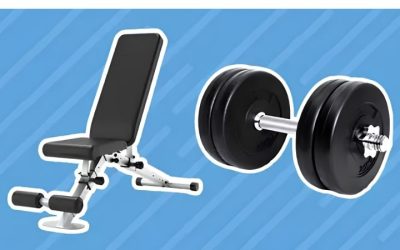
Best Home Gym Equipment for Beginners: The Starter Setup
Best home gym equipment for beginners is not a machine – it...
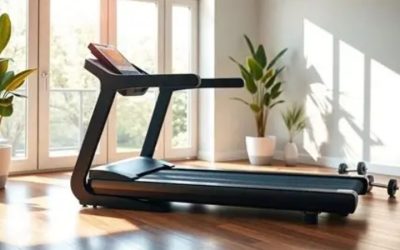
Best Treadmills for Home Gym: 5 Picks by Deck and Motor
Best treadmills for home gym decisions come down to two specifications and...
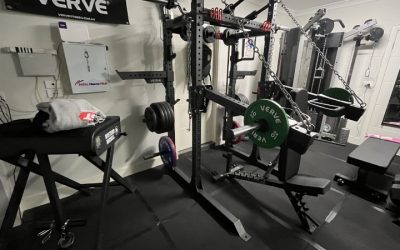
Best Home Gym Compact Setups: 6 Space-Saving Picks Ranked
Best home gym compact claims usually quote a stored footprint and stay...
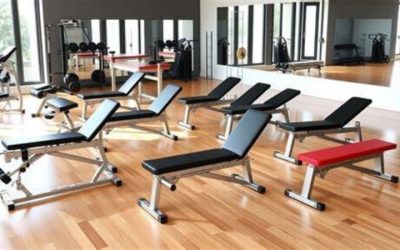
Best Adjustable Bench for Home Gym: 5 Picks Ranked by Use
Best adjustable bench for home gym decisions turn on three numbers most...
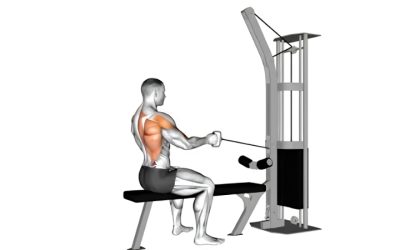
Best Cable Machine for Home Gym: 5 Picks and Pulley Ratios
Best cable machine for home gym shortlists collapse quickly once you convert...
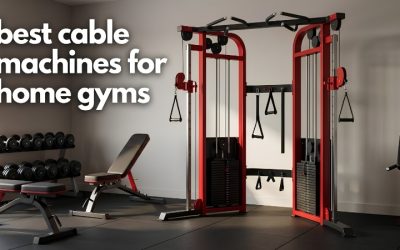
Best Cable Machines for Home Gym: 5 Types and Their Limits
Best cable machines for home gym use are not one product category...
Write Your Review
No reviews yet. Be the first to share your experience!