
Key takeaways
- Handle length versus plate stack. A 14-inch handle keeps your hands close together for close-grip presses and clears your ears on skull crushers, but it also caps how many plates fit per side. If you’re extending 60-plus pounds per hand, you’ll need thin steel plates rather than bulky vinyl ones.
- Plate bore compatibility. "Regular" or "standard" means a 1-inch hole. Olympic plates with 2-inch holes will slide right off. Check what’s already in your garage before you buy, because mixing the two is an expensive mistake.
- Collar design. Threaded spin-lock collars are the most secure option in this price bracket, but they take a few seconds to run down the threads. Star-lock and clip collars are faster and less trustworthy — a rattling plate above your forehead is not a training stimulus you want.
- Grip diameter and knurling. Roughly a 1-inch shaft with moderate knurling gives you enough bite for sweaty kickback sets without shredding your palms during high-rep work. Aggressive knurling feels great for pressing and miserable for anything over 15 reps.
- Cost per pound, all in. Handles are cheap; plates are where the money goes. Price out the full setup — handles plus the plate assortment you actually need, including 1.25s and 2.5s — before comparing against a fixed dumbbell set.
What's inside
The triceps take up roughly two-thirds of your upper arm, and they do it with three separate heads that respond to different joint angles. The long head crosses the shoulder, so it only reaches full stretch when your elbow is overhead — think seated dumbbell extensions or a deep cross-body skull crusher. The lateral and medial heads care less about shoulder position and more about hard elbow extension under load, which is where close-grip dumbbell presses and Tate presses earn their keep. A pair of dumbbells covers all of it: overhead extensions for the long head, kickbacks and rolling extensions for the lateral head, and heavy pressing variations that let the medial head do what it does best.
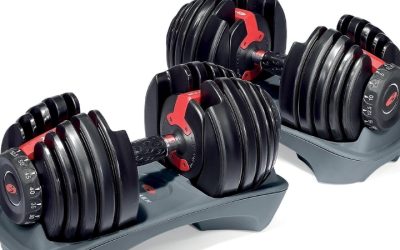
The catch is loading. Fixed dumbbells usually jump in 5-pound increments, which sounds harmless until you’re doing a single-arm overhead extension with 20 pounds and the next available weight is a 25 percent increase. Your triceps will stall long before your back or legs care about a jump that size. Loadable spin-lock handles solve this by letting you add a 1.25-pound plate per side, so progression happens in slices your elbows can actually absorb — and you store one pair of handles instead of a rack of eight dumbbells.
As an Amazon Associate we earn from qualifying purchases at no extra cost to you. Product prices and availability are accurate as of the date shown and are subject to change.

#1 Pick
#2 Pick

#3 Pick

#4 Pick

#5 Pick

#6 Pick

#7 Pick
Quick Comparison
| Pick | Type | Handle Length | Plate Fit | Locking | Best For |
|---|---|---|---|---|---|
| CAP Barbell 14" Regular Dumbbell Handles | Multiple Options | Loadable spin-lock handles | 14 in. | 1 in. standard bore plates | Threaded spin-lock collars | Micro-loading skull crushers, overhead extensions, and close-grip presses on a budget |
How to Choose
- Handle length versus plate stack. A 14-inch handle keeps your hands close together for close-grip presses and clears your ears on skull crushers, but it also caps how many plates fit per side. If you’re extending 60-plus pounds per hand, you’ll need thin steel plates rather than bulky vinyl ones.
- Plate bore compatibility. "Regular" or "standard" means a 1-inch hole. Olympic plates with 2-inch holes will slide right off. Check what’s already in your garage before you buy, because mixing the two is an expensive mistake.
- Collar design. Threaded spin-lock collars are the most secure option in this price bracket, but they take a few seconds to run down the threads. Star-lock and clip collars are faster and less trustworthy — a rattling plate above your forehead is not a training stimulus you want.
- Grip diameter and knurling. Roughly a 1-inch shaft with moderate knurling gives you enough bite for sweaty kickback sets without shredding your palms during high-rep work. Aggressive knurling feels great for pressing and miserable for anything over 15 reps.
- Cost per pound, all in. Handles are cheap; plates are where the money goes. Price out the full setup — handles plus the plate assortment you actually need, including 1.25s and 2.5s — before comparing against a fixed dumbbell set.
Top Picks Reviewed
CAP Barbell 14" Regular Dumbbell Handles | Multiple Options
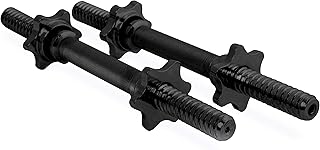
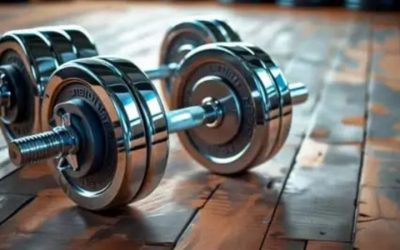
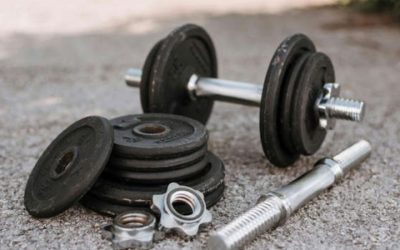
These are the workhorse handles that show up in half the home gyms in the country, and there’s a reason: they’re chrome-finished steel with threaded ends and spin-lock collars, sized for 1-inch standard plates, at a price that’s usually less than a single 25-pound fixed dumbbell. The 14-inch length is the sweet spot for triceps work. It’s short enough that your hands stay stacked and neutral on a close-grip floor press, and short enough that lowering into a skull crusher doesn’t mean threading a long bar past your skull. The knurled center section is textured without being sharp, which matters more than you’d think once you’re eight reps into a rolling extension and your palms are slick. The multiple-option listing lets you pick a single handle or a pair depending on whether you’re building out a set or replacing a bent one.
In practice, the workflow is simple: load two 5s and a 1.25 per side, spin the collars down snug against the plates, and go. Snug is the operative word — hand-tightened collars on a partially loaded shaft will work loose if you leave a gap, so slide the plates flush to the inside stop first. Do that and they stay put through overhead sets. Expect a slightly longer plate change than a selectorized dumbbell, which is the real trade-off you’re accepting for a fraction of the cost and the ability to make 2.5-pound total jumps that fixed dumbbells simply can’t offer.
Frequently Asked Questions
How heavy should my dumbbells be for triceps work?
Lighter than you’d guess. Most lifters who bench 200 pounds are doing seated overhead extensions with 25 to 40 pounds in two hands and kickbacks with 10 to 20 pounds per side. Build your plate collection with that in mind: plenty of 2.5s, 5s, and 10s, and at least one pair of 1.25s for micro-loading. A mountain of 45s is useless here.
Are loadable handles safe for skull crushers?
Yes, with two habits. Push the plates flush against the inner stop before tightening so nothing can shift, and give the collars a firm turn — then a quick tug-check on both plates before your first rep. Also lower toward your forehead or slightly behind your head rather than straight down onto your face, and stop the set when your elbows start flaring rather than grinding out a shaky final rep.
One-arm or two-arm overhead extensions?
Both, for different reasons. Two-arm work lets you load more total weight and is easier to brace against a bench, which is where progressive overload lives. Single-arm extensions give you a deeper, cleaner stretch on the long head and expose side-to-side differences you’d otherwise hide. A reasonable split is heavy two-arm work early in the session, single-arm work for higher reps at the end.
What rep ranges actually build triceps?
The elbow joint tolerates volume better than it tolerates maximal loads, so most of your work belongs in the 8 to 20 rep window taken close to failure. Save the low-rep grinding for close-grip pressing, where the shoulders and chest share the load. Two to four hard sets per exercise, two sessions a week, is enough for steady progress.
Final Thoughts
Triceps training rewards precision over hardware: correct elbow position, a stretch on the long head, and load that climbs in increments small enough to keep working. A pair of 14-inch standard handles and a sensible spread of small plates delivers exactly that for roughly the cost of a couple of fixed dumbbells, and it scales as you get stronger instead of hitting a ceiling. Start with the plate sizes you’ll use most, keep the collars tight, and let 2.5-pound jumps do the work over a few months.
Note: only one product was supplied, so the “6 Equipment Picks” in the title doesn’t match the content — send me the other five and I’ll expand the comparison table and reviews section.
Write Your Review
No reviews yet. Be the first to share your experience!