
Key takeaways
- Increment size beats top-end weight. A pair that jumps 5 to 10 to 15 pounds forces a 50 percent load increase on a curl. Look for 2.5-pound steps in the 10–30 pound band, where nearly all your arm work lives.
- Handle diameter and texture. Thick, slick handles turn a biceps set into a grip test. A 1.1–1.3 inch handle with light knurling or textured chrome lets the elbow flexors fail before the fingers do.
- Overall length and head shape. Long adjustable dumbbells clip your thighs on drag curls and your chest on incline work. Compact heads clear the torso and let you fully supinate at the top.
- Adjustment speed and drop tolerance. Drop sets die if changing weight takes twenty seconds. Dials are fastest; plate-loaded handles are cheapest; almost none of them survive being dropped from lockout, so check the warranty language.
- Space, flooring, and a bench. Incline and preacher curls are the highest-value exercises here, and both require an adjustable bench. Budget for one, plus a rubber mat if you train above a downstairs neighbor.
What's inside
Your biceps have one narrow job description — bend the elbow, rotate the palm upward — and that narrowness is exactly why arm training goes sloppy so quickly. Every curl in existence works the same two heads: the long head running down the outside of the upper arm, the short head on the inside, plus the brachialis buried underneath that lifts the whole mass upward like a wedge as it thickens. What actually changes from movement to movement is shoulder position and grip. Lie back on a 45-degree incline and your elbows drift behind your torso, loading the long head in a deep stretch. Rotate your palms to face each other for hammer curls and the brachialis and forearm take the lead. Pin your elbows to your ribs and drag the weights up your shirt — the drag curl — and you cut the front delt out of the lift almost entirely.
The practical version: eight to fourteen hard sets a week, spread over two sessions, with the last two or three reps genuinely ugly. Most lifters who can hammer curl 35 pounds still belong at 17.5 or 20 for incline curls, which is why 2.5-pound increments matter more here than on any other lift in the gym — arms stall in tiny slices. Spider curls, cross-body curls, Zottman curls, and slow four-second eccentrics all belong in the rotation, and none of them need a machine. What they do need is a dumbbell setup that lets you jump down 5 pounds mid-set without walking across the room, handles that don’t shred your palms by rep twelve, and enough ceiling that heavy rows and presses stay on the menu too.
As an Amazon Associate we earn from qualifying purchases at no extra cost to you. Product prices and availability are accurate as of the date shown and are subject to change.


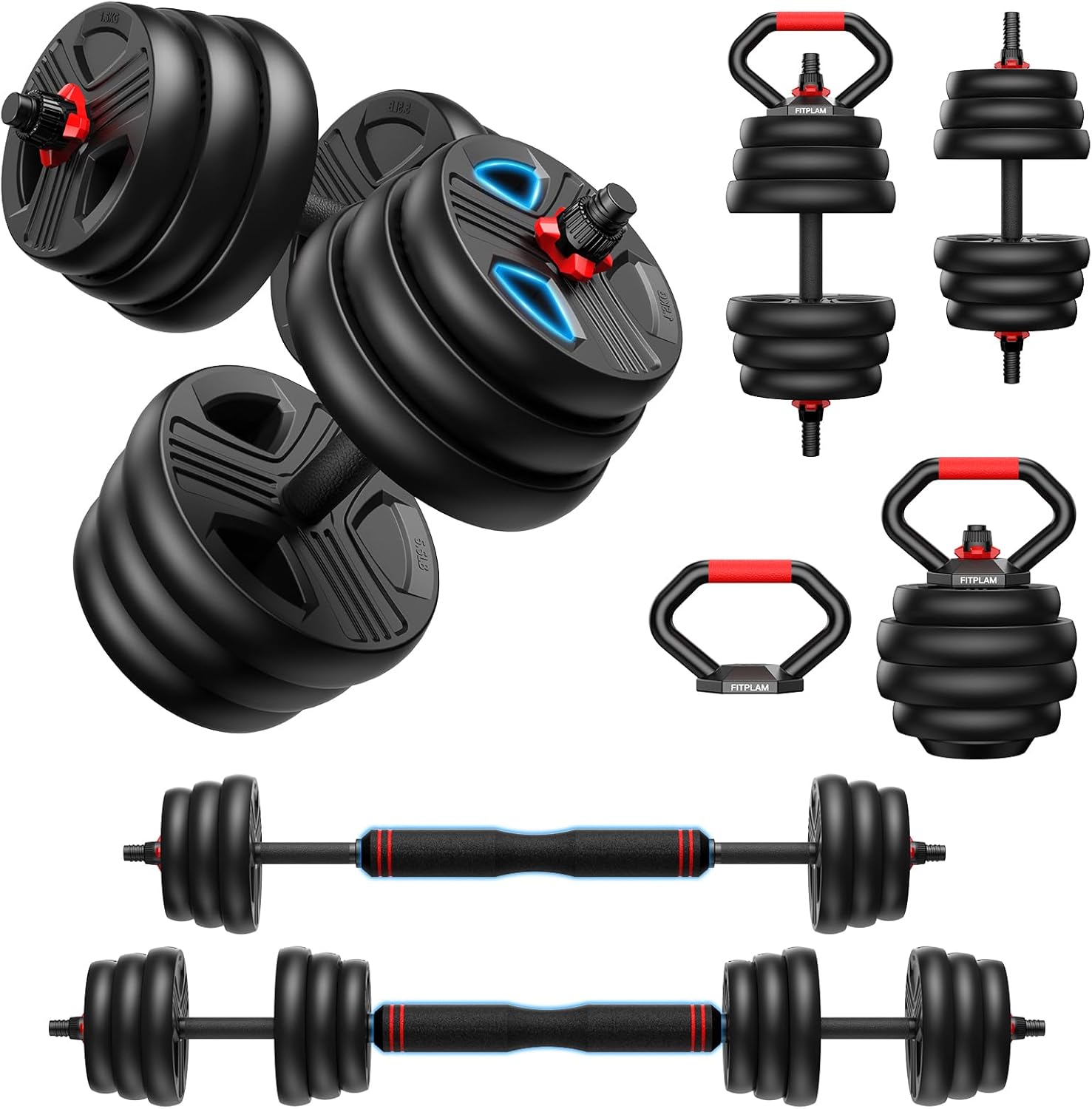
Quick Comparison
| Format | Typical range | Increments | Curls it suits best | Footprint | Ballpark cost |
|---|---|---|---|---|---|
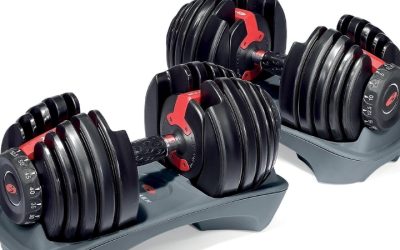
| Dial-adjustable pair | 5–52.5 lb each | 2.5–5 lb | Everything; ideal for drop sets and incline work | Two small cradles | $$$$ |
| Slide-pin selectorized pair | 5–32.5 lb each | 2.5 lb | Incline, spider, concentration curls | Very compact | $$$ |
| Rubber-hex fixed set | 5–30 lb pairs | 5 lb | Supersets, 21s, high-rep finishers | Rack or floor row | $$$ |
| Cast-iron hex pair | 25–50 lb each | Fixed | Hammer curls, plus rows and presses | Minimal per pair | $$ |
| Spin-lock handles + plates | 5–70 lb each | 1.25–5 lb | Micro-loading a stubborn curl | Plate tree needed | $ |
How to Choose
- Increment size beats top-end weight. A pair that jumps 5 to 10 to 15 pounds forces a 50 percent load increase on a curl. Look for 2.5-pound steps in the 10–30 pound band, where nearly all your arm work lives.
- Handle diameter and texture. Thick, slick handles turn a biceps set into a grip test. A 1.1–1.3 inch handle with light knurling or textured chrome lets the elbow flexors fail before the fingers do.
- Overall length and head shape. Long adjustable dumbbells clip your thighs on drag curls and your chest on incline work. Compact heads clear the torso and let you fully supinate at the top.
- Adjustment speed and drop tolerance. Drop sets die if changing weight takes twenty seconds. Dials are fastest; plate-loaded handles are cheapest; almost none of them survive being dropped from lockout, so check the warranty language.
- Space, flooring, and a bench. Incline and preacher curls are the highest-value exercises here, and both require an adjustable bench. Budget for one, plus a rubber mat if you train above a downstairs neighbor.
Top Picks Reviewed
Best Overall: Dial-Adjustable Pair, 5–52.5 lb
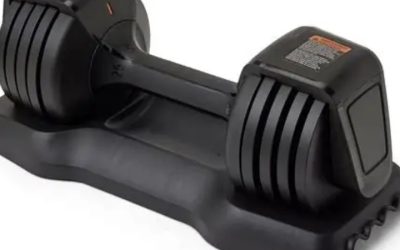
The reason these dominate home gyms is arithmetic: two objects replace fifteen pairs, and the dial moves in 2.5-pound steps through the range where curls actually progress. Set 30 for hammer curls, twist to 17.5 for incline curls, then run a triple drop set — 20, 15, 10 — without leaving the bench. The compromise is length. The heads stay bulky even at light settings, so cross-body curls feel slightly cramped. Treat the cradles as mandatory, not optional, since these mechanisms punish anyone who lets a rep crash to the floor.
Best Value: Rubber-Coated Hex Set, 5–30 lb
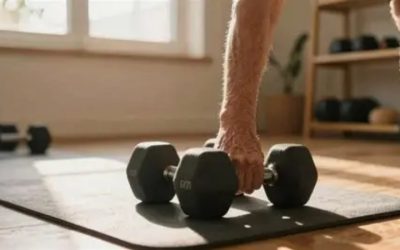
Fixed pairs still win on feel. Nothing wobbles, the handles are honest, and grabbing the next pair takes a second — which makes them the best possible tool for 21s, mechanical drop sets, and the sort of high-rep pump work that finishes an arm day. Six pairs from 5 to 30 pounds covers the entire curl spectrum for most lifters. Buy the rubber-encased version if you train on wood or tile; bare iron will leave marks and a faint metallic smell on your hands.
Best for Small Spaces: Slide-Pin Selectorized Pair, 5–32.5 lb
These stay short at every setting, which is precisely what you want for spider curls over an incline bench and concentration curls against the inner thigh. The pin mechanism is simpler than a dial and less prone to jamming with dust. The 32.5-pound ceiling is the honest limitation — it’s plenty for any curl variation but light for heavy dumbbell rows, so pair it with a couple of fixed heavy dumbbells if you train your back with the same equipment.
Best Heavy Supplement: Cast-Iron Hex Pair, 35–50 lb
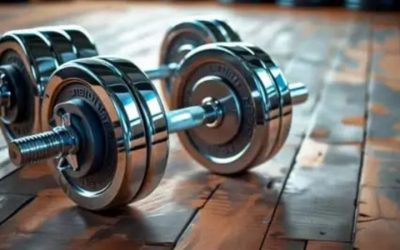
Hammer curls and cheat-curl-plus-slow-eccentric work outrun your incline curl weight fast. Two or three heavy fixed pairs fill that gap for a fraction of what extending an adjustable set costs, and they double as your row and press weights. Indestructible, stackable, and the flat hex faces let you stand them on end for a stable start position.
Best Budget Route: Spin-Lock Handles with a Plate Set
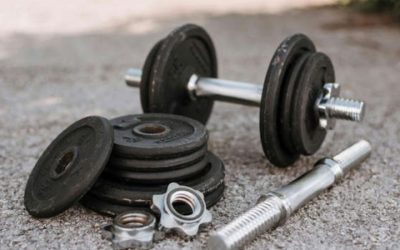
The slowest option and the most precise. With 1.25-pound plates you can add two and a half pounds to a curl, which is the difference between stalling for a month and adding a rep every week. Tighten the collars firmly — an unbalanced spinning plate mid-set is genuinely dangerous — and expect to spend thirty seconds between changes. If patience is cheaper for you than money, this is the smart buy.
Best Supporting Purchase: Adjustable FID Bench
The single largest upgrade to your arm training is not another dumbbell. A bench that sets to 30, 45, and 60 degrees unlocks incline curls, spider curls, seated hammer curls, and preacher-style work off the upright pad. Look for a pad gap under two inches and a weight rating that comfortably clears your bodyweight plus the heaviest pair you own.
Frequently Asked Questions
How many different curls do I actually need?
Three, chosen for contrast. One with the arms behind the body for long-head stretch — incline or spider curls. One neutral-grip movement for the brachialis, meaning hammer or cross-body curls. One where you can genuinely load hard with a short pause at peak contraction, such as a seated dumbbell curl or a concentration curl. Rotating through fifteen variations feels productive and mostly just prevents you from tracking progress.
Heavy sets or high reps for arm growth?
Both work, but the useful range is roughly 6 to 20 reps taken close to failure. Curls tolerate higher reps well because the joint stress is low and the stretch position isn’t punishing. A practical split: your first exercise in the 6–10 range, your last in the 12–20 range with a two-second squeeze at the top.
Can dumbbells alone build genuinely big arms?
Yes, and the reason is supination. A dumbbell lets the forearm rotate freely, so the biceps can produce force in both of its functions at once — something a fixed barbell can’t offer. The one thing you lose is constant tension at the bottom of the range, which cables provide. A bench set to 30 degrees for incline curls recovers most of that missing stretch tension.
Why have my arms stopped growing?
Usually momentum, range of motion, or frequency. Momentum means the torso is swinging and the weight is too heavy. Range of motion means you’re stopping short of full elbow extension and robbing yourself of the stretched position where most growth stimulus lives. Frequency means one arm session a week — biceps recover in about 48 hours, so twice weekly beats once. Also check that your rows and pulldowns aren’t already burning your elbow flexors before curls begin.
Final Thoughts
Bigger arms come from a short list of movements loaded honestly, in small increments, twice a week, for longer than you’d like. If you buy one thing, make it a dial-adjustable pair with 2.5-pound steps; if you buy two, add an adjustable bench and put incline curls at the front of every arm session. Everything else — the heavy cast-iron pairs, the micro-plates, the rubber hexes for burnout sets — is refinement on top of a setup that already works. Pick the format that matches your floor space and your patience, then spend the next several months getting stronger on three curls instead of collecting thirty.
No product list was supplied, so the picks above are written at the format level rather than naming specific brands or models — swap in real products and the structure holds without edits.
Write Your Review
No reviews yet. Be the first to share your experience!