Key takeaways
- Compare nugget ice vs bullet ice by texture, drink performance, speed, noise, upkeep, storage and cost before choosing a countertop machine.
The choice between nugget ice and bullet ice is less about which is universally “best” and more about texture, routine and maintenance. Nugget machines produce compacted, chewable pieces that pack closely around a drink. Portable bullet machines freeze rounded hollow pieces around metal fingers and are commonly chosen for quick, straightforward household ice. Both can be convenient, but they are different appliance categories.
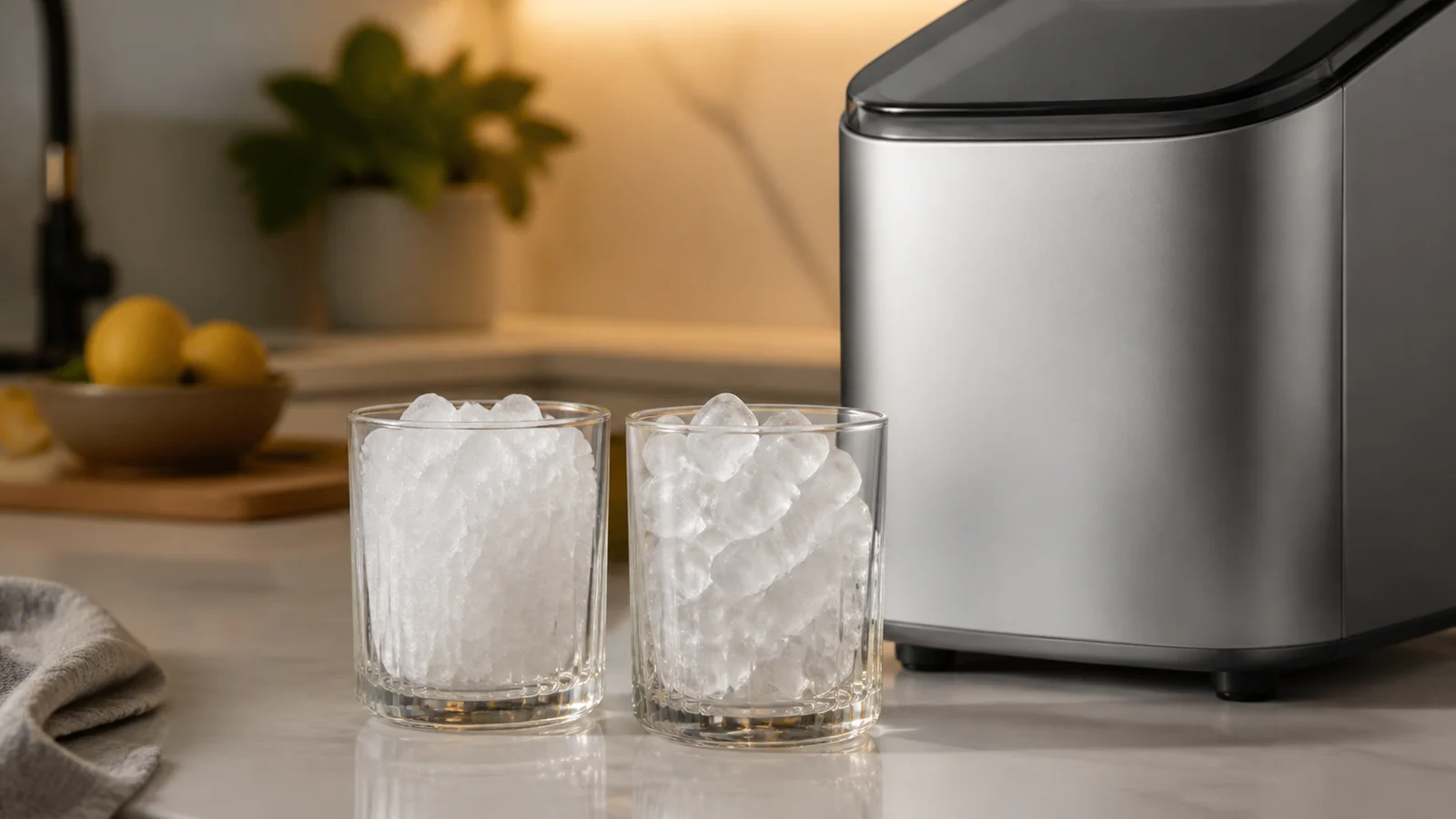
This comparison explains the practical trade-offs without assuming a specific brand or claiming one design always wins. Verify every model’s manual, dimensions and warranty before purchase.
Our top picks

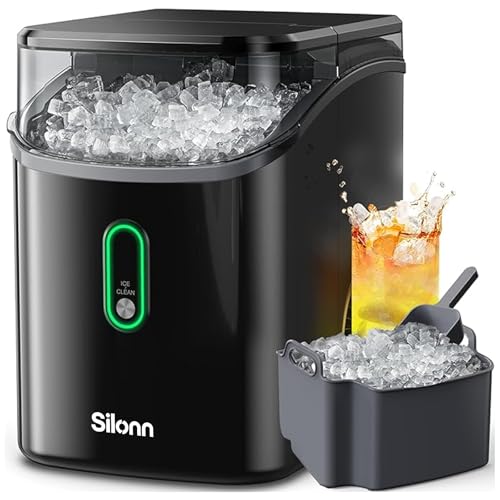
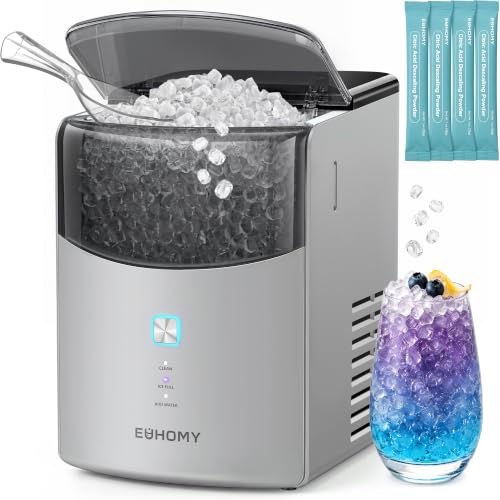


As an Amazon Associate we earn from qualifying purchases at no extra cost to you.
Nugget ice and bullet ice at a glance
Nugget ice—also called pebble or chewable ice in everyday shopping language—is generally made by freezing a thin layer of water, scraping it and compressing the crystals into porous pieces. The exact mechanism varies. Its air pockets and small size give it a softer, chewable texture and a large surface area.
Bullet ice forms around chilled evaporator fingers. The resulting pieces are rounded or cylindrical with a hollow center. They are usually firmer than nuggets but less dense than traditional solid freezer cubes. Small and large buttons commonly adjust freezing time rather than changing the basic form.
“Sonic ice,” “pellet ice,” “pebble ice” and “crushed ice” are often used loosely in listings. Read the product description and manual instead of relying on a nickname. Mechanically crushed cubes are not necessarily the same as compressed nugget ice.
Texture and chewing
Texture is the clearest reason to choose nugget ice. Its porous structure absorbs some beverage and breaks more easily under the teeth. People who enjoy chewing ice often prefer it, although anyone with dental concerns should ask a dental professional whether chewing any ice is appropriate.
Bullet ice feels smoother and firmer. Its hollow center keeps each piece relatively light, but batches can fuse as wet surfaces refreeze. It works well when the goal is simply to chill water, soda or casual mixed drinks rather than reproduce a restaurant-style chew.
For shoppers focused on soft texture, a true nugget mechanism matters more than a listing that merely says “soft” or “crushed.” Our nugget and crushed-ice machine guide discusses the terminology in more detail.
Cooling and dilution
Small pieces expose more surface area to liquid than one large dense cube of equal mass. Nugget ice therefore chills quickly and tends to interact strongly with a beverage. It also occupies gaps efficiently, so a glass can feel generously packed.
Bullet pieces also chill rapidly compared with large solid cubes, especially when small. Their hollow shape adds surface area, and their wet exterior can begin diluting a drink immediately. Neither style is an ideal substitute for large, dense cubes when the goal is very slow dilution in a spirit-forward cocktail.
Actual melt behavior depends on ice temperature, piece size, drink temperature, glass, room conditions and how long ice sat in the basket. Marketing descriptions such as “slow melting” should be treated cautiously unless a comparison states its test method.
Startup time and continuous output
Portable bullet machines are often designed around short repeated cycles and may deliver an initial batch quickly under favorable conditions. Nugget systems generally involve an auger or compression mechanism and can have a different startup pattern. Advertised first-ice and daily-pound figures are model-specific and measured under stated or ideal conditions.
Do not compare daily output alone. Ask how much ice the basket holds, whether the unit pauses when full, how often the reservoir needs filling and whether melted ice recirculates. A large theoretical daily number is not useful if the household does not transfer ice regularly.
Warm water, warm rooms and poor ventilation reduce practical production for either type. Choose based on the busiest normal hour, not an imagined 24-hour maximum.
Noise profile
Both styles use refrigeration components, water movement and fans. Bullet ice adds periodic drop sounds when pieces release into the basket. Nugget machines may add auger, extrusion or dispensing noise. Published decibel figures are useful only when the measurement method and distance are comparable.
Placement changes perceived sound. A hollow cabinet, tight corner or stone backsplash can reflect vibration. Leave the required clearance and level the machine. If it will operate beside a home office or sleeping area, examine owner manuals for cycle behavior and retailer return terms instead of assuming a “quiet” label guarantees silence.
Cleaning and maintenance
Every countertop ice maker handles water and stays damp, so every design needs draining, washing, rinsing and drying. Nugget mechanisms may have water paths or an auger area that are less visible to the user. Bullet machines often have an open reservoir and visible freezing fingers, but those surfaces still cannot be scrubbed aggressively.
A self-clean button is a circulation program, not proof that all food-contact parts are clean. Wash removable parts and wipe accessible surfaces according to the manual. Descale at an interval appropriate to the appliance instructions and local water conditions. Our comparison of self-cleaning countertop ice makers explains what that feature can and cannot do.
Before buying, download the manual and search for drain location, cleaning solution, rinse cycles, removable components and storage procedure. A machine you will actually clean is a better purchase than a higher-output model with awkward access.
Water sensitivity
Mineral content can influence scale, taste and ice appearance in either design. Some models allow or require a filter, while others do not. Very low-mineral water can interact with certain water-level sensing systems, so distilled or reverse-osmosis water should not be assumed compatible.
Use potable water of the type and temperature specified by the manufacturer. If a filter is used, confirm its intended reduction claims, replace it on schedule and flush it as directed. A generic filter cannot be assumed to soften water or make it microbiologically safe.
Storage is similar for both
Most countertop machines have an insulated collection basket rather than a refrigerated freezer compartment. Ice left inside melts; water may return to the reservoir and be made into another batch. Nuggets can clump as wet surfaces refreeze, and bullet pieces can fuse as well.
For later use, transfer ice promptly to a freezer-safe container. The FDA’s consumer guidance for ice recommends clean, food-safe containers and clean utensils. Expect the home freezer to change texture: nuggets may harden together, while bullet ice may need separating. If scoopable storage is essential, consider the whole transfer routine rather than just the maker.
Footprint and placement
Compact bullet machines are widely available, including handle-equipped models intended to move between a kitchen, bar or RV. Nugget machines can be taller or deeper because of their production mechanism, though compact examples exist.
Measure counter depth, width, lid-opening height and ventilation space. Include room for filling and draining. A unit that technically fits beneath a cabinet may be frustrating if the lid cannot open or the rear drain cannot be reached.
Portability does not mean outdoor weather resistance. Use the appliance only in locations authorized by its manual, with an appropriate grounded supply and protection from water exposure.
Purchase price and long-term cost
Entry-level bullet makers are commonly the lower-cost route. Nugget texture often carries a higher purchase price because the mechanism is more involved. Prices change, however, so compare current models rather than relying on a fixed range.
Long-term cost includes cleaner, filters where applicable, energy, replacement parts and the possibility of shipping a heavy machine for warranty service. Check warranty length, exclusions and support availability. An inexpensive model with clear maintenance instructions may offer better value than a feature-rich unit with unavailable parts.
For basic occasional ice, the options in this under-$100 countertop ice maker guide illustrate why simple bullet machines remain popular.
Best uses for nugget ice
Nugget ice is a strong match when:
- Chewable texture is the primary reason for buying a machine.
- The household makes frequent sodas, lemonades or iced drinks.
- Rapid chilling and ice that carries beverage flavor are desirable.
- Users accept more involved cleaning for the preferred texture.
- Counter space and budget support the chosen model.
It is less compelling when the machine will be used only a few times a month or when easy draining and storage outrank texture.
Best uses for bullet ice
Bullet ice is a practical match when:
- Fast, general-purpose ice is more important than restaurant-style texture.
- Budget and compact size are leading constraints.
- The machine may be moved or stored between uses.
- Drinks do not require large, slow-melting cubes.
- A simple open-basket workflow suits the household.
It is less suitable for someone who specifically wants soft pellet ice or expects the basket to preserve ice all day.
A decision checklist
Before choosing, answer these questions:
- Which texture will people actually use every day?
- How many drinks are served during the busiest hour?
- Where will the finished ice go after production?
- Can the reservoir, drain and removable parts be reached easily?
- What clearances does the manual require?
- Is the water source compatible with the model?
- What sounds occur during freezing and harvest?
- Are warranty service and replacement filters available?
If texture is not decisive, prioritize maintenance access, fit and support. These factors tend to affect ownership longer than a small difference in claimed output.
Frequently asked questions
Is nugget ice the same as crushed ice?
Not necessarily. Nugget ice is usually formed from compressed ice crystals, while crushed ice may simply be larger cubes broken mechanically. Retail terminology varies, so verify the mechanism and photographs.
Does bullet ice last longer than nugget ice?
There is no universal answer. Piece mass, starting temperature, surface area and drink conditions matter. Both small countertop styles generally melt faster than a large dense freezer cube.
Which type is easier to clean?
Design matters more than the label. Compare drain access, removable parts, authorized cleaning cycle and manual clarity. A poorly accessible bullet machine can be harder to maintain than a well-designed nugget model.
Bottom line
Choose nugget ice for chewable texture and drink-packing appeal; choose bullet ice for accessible, compact and often lower-cost everyday production. Neither style keeps ice frozen in a typical countertop basket, and neither eliminates cleaning. The best machine is the one whose texture, hourly workflow, water requirements and maintenance routine fit your home.