
Key takeaways
- Match firmness to your tolerance, not your ego. If you flinch and hold your breath, the muscle guards and nothing releases. Start medium-firm and graduate upward as tissue tolerance improves.
- Look at surface geometry. Smooth cylinders spread load evenly and are forgiving over bony landmarks. Ridged and knobbed surfaces concentrate pressure into narrow contact points, which is what you want on dense glute and quad tissue.
- Pick a length for your primary use. Thirty-six inches lets you lie perpendicular across your spine or roll both hamstrings at once. Twelve to thirteen inches is far easier to steer into a single calf, and it fits a gym bag.
- Check the core and the weight rating. Hollow ABS tubes stay rigid for years and support 300-plus pounds; cheap open-cell foam permanently dents within months. Solid EPP splits the difference and costs the least.
- Decide whether extras earn their price. Vibration genuinely raises pressure-pain thresholds and helps you tolerate deeper work. Collapsibility matters if you travel weekly. Neither helps if you won’t use the thing four times a week.
What's inside
A foam roller is the rare piece of recovery gear that either works within thirty seconds or doesn’t work at all. If a roller compresses under your bodyweight the moment you park a calf on it, the pressure never reaches the tissue you’re trying to reach — you’re just doing an awkward plank. The differences that matter are unglamorous: the density of the foam (measured in durometer, though almost nobody prints it on the box), whether the core is a hollow ABS tube or solid molded EPP, and how the surface geometry distributes load across muscle versus bone.
I’ve sorted the picks below by who they’re actually for, not by which one is “best” in the abstract. A 36-inch soft roller is superb for thoracic extension and useless for digging into a knotted peroneal. A knobbed deep-tissue roller is brilliant on glutes and miserable on a bruised IT band. Weight limits, travel size, and washability all get factored in, because a roller that lives in a closet because it won’t fit in a carry-on isn’t recovering anything.
As an Amazon Associate we earn from qualifying purchases at no extra cost to you. Product prices and availability are accurate as of the date shown and are subject to change.


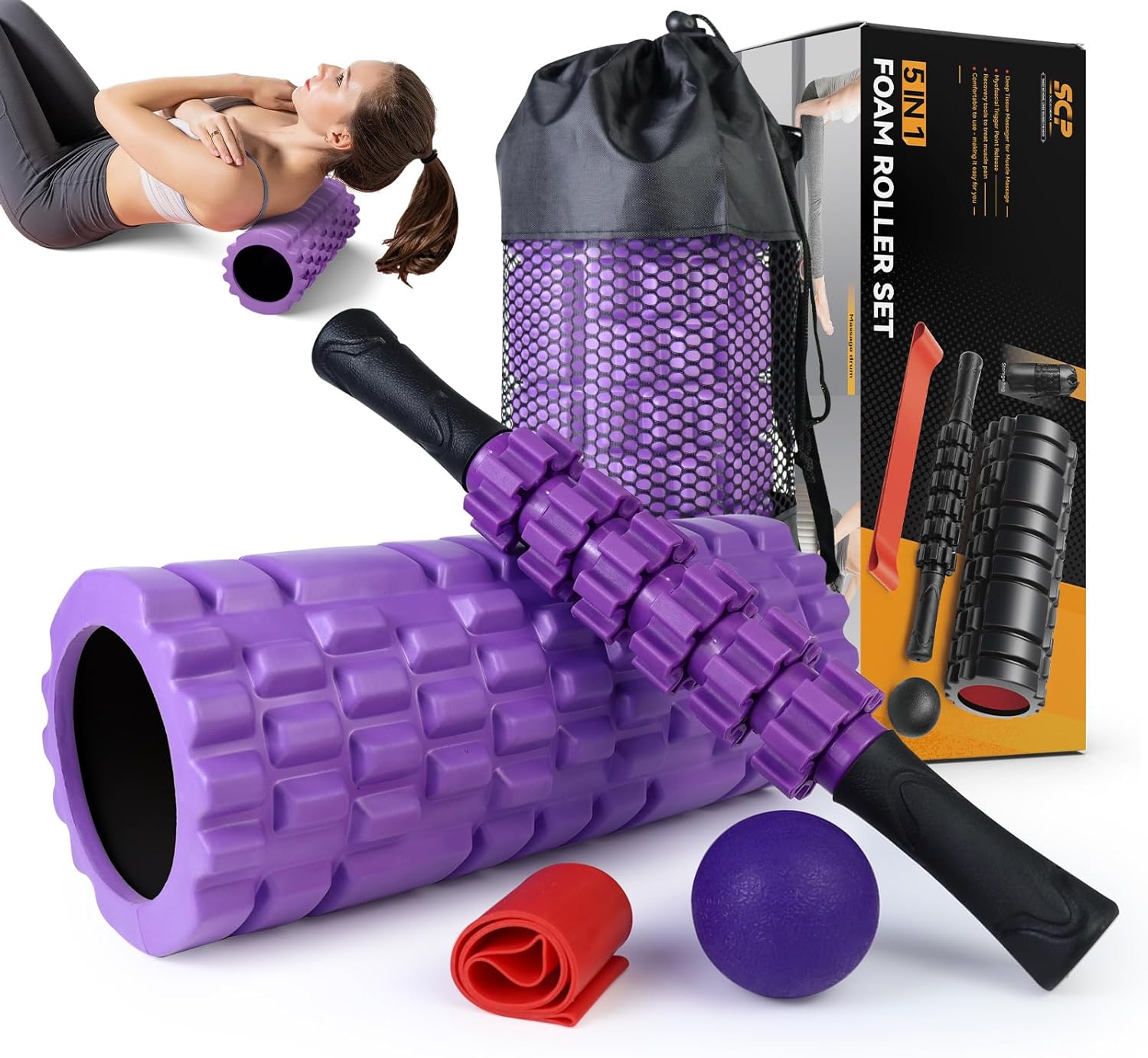


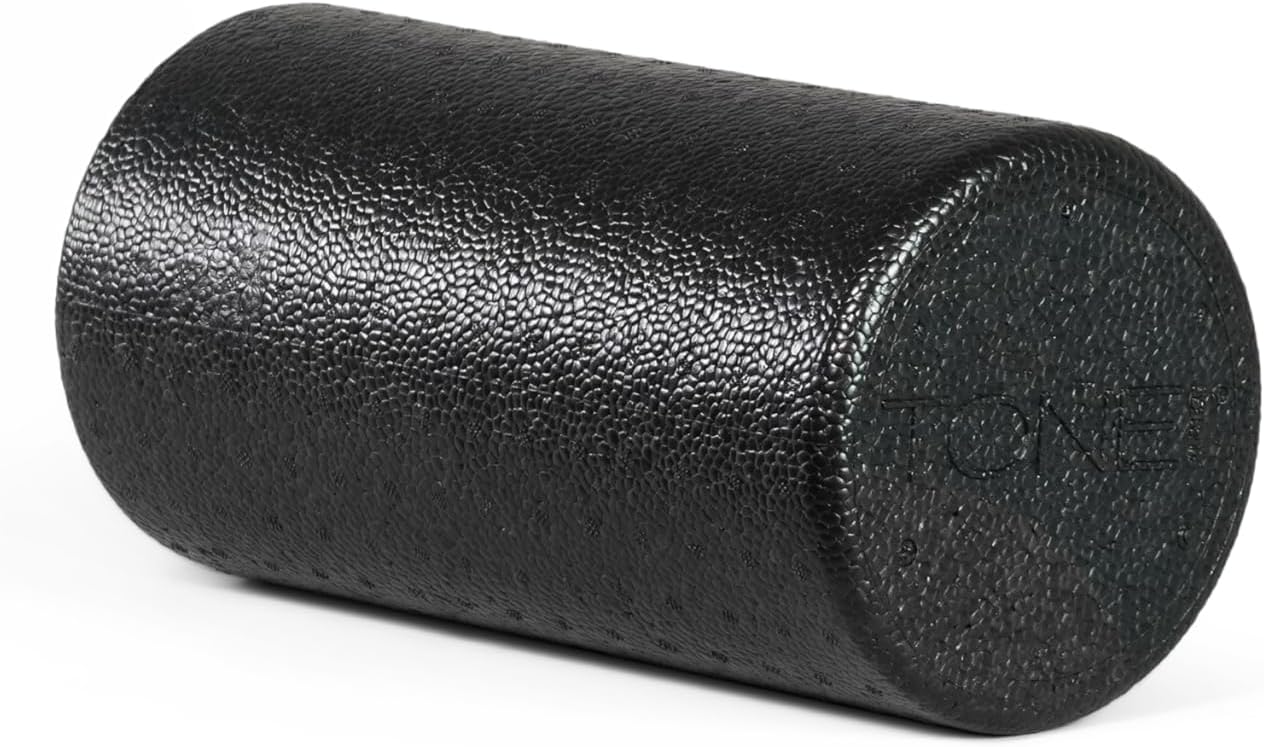
As an Amazon Associate we earn from qualifying purchases at no extra cost to you. Product prices and availability are accurate as of the date shown and are subject to change.
Quick Comparison
| Model | Feel | Size | Core | Best For |
|---|---|---|---|---|
| TriggerPoint GRID 1.0 | Medium-firm | 13″ × 5.5″ | Hollow ABS | All-purpose daily use |
| RumbleRoller Deep Tissue | Very firm, knobbed | 13″ or 31″ × 6″ | Solid EVA | Glutes, quads, stubborn knots |
| Hyperice Vyper 3 | Firm + vibration | 12″ × 5.5″ | Rechargeable motor | Pre-workout warm-ups |
| Amazon Basics High-Density | Firm, smooth | 12″–36″ × 6″ | Molded EPP | Budget and beginners |
| OPTP PRO-Roller Soft Blue | Soft | 36″ × 6″ | Molded EVA | Spinal mobility, sensitivity |
| Brazyn Morph Bravo | Firm | Collapses to 2″ | Bamboo + nylon | Travel and small spaces |
How to Choose
- Match firmness to your tolerance, not your ego. If you flinch and hold your breath, the muscle guards and nothing releases. Start medium-firm and graduate upward as tissue tolerance improves.
- Look at surface geometry. Smooth cylinders spread load evenly and are forgiving over bony landmarks. Ridged and knobbed surfaces concentrate pressure into narrow contact points, which is what you want on dense glute and quad tissue.
- Pick a length for your primary use. Thirty-six inches lets you lie perpendicular across your spine or roll both hamstrings at once. Twelve to thirteen inches is far easier to steer into a single calf, and it fits a gym bag.
- Check the core and the weight rating. Hollow ABS tubes stay rigid for years and support 300-plus pounds; cheap open-cell foam permanently dents within months. Solid EPP splits the difference and costs the least.
- Decide whether extras earn their price. Vibration genuinely raises pressure-pain thresholds and helps you tolerate deeper work. Collapsibility matters if you travel weekly. Neither helps if you won’t use the thing four times a week.
Top Picks Reviewed
TriggerPoint GRID 1.0 — Best Overall
The GRID’s patterned EVA surface sits on a hollow polypropylene core, and that combination is why it has stayed the default recommendation in physical therapy clinics. The raised channels create small gaps that let blood and fluid move rather than pinning tissue flat, and the interior tube means the roller keeps its exact shape after hundreds of sessions. At 13 inches it targets one limb at a time with real precision. It’s rated to 500 pounds, wipes clean, and the medium-firm feel suits a first-time roller and a competitive lifter equally well.
RumbleRoller Deep Tissue — Best for Aggressive Work
The knobs are the point. They’re molded from a firmer compound than the roller body, so instead of flattening under load they flex and bend around soft tissue while pressing into it — closer to a thumb than a rolling pin. On glutes, quads, and lats it reaches depth a smooth roller can’t. It is genuinely uncomfortable at first, so buy the original density rather than the extra-firm black version unless you already roll regularly. Skip it directly over the IT band and shins.
Hyperice Vyper 3 — Best Vibrating Roller
Three intensity settings driven by a brushless motor, roughly two hours of runtime per charge, and a grippy textured shell. The mechanism is neurological: vibration floods the area with sensory input, which dulls pain signaling enough that you can hold a tender spot longer and with more pressure. It shines in the ten minutes before training, waking up hip flexors and thoracic tissue faster than static rolling. It’s heavy, expensive, and airline-legal, and the top setting will rattle your teeth in a good way.
Amazon Basics High-Density Round Foam Roller — Best Budget Pick
A molded polypropylene cylinder with a smooth surface, sold in 12, 18, 24, and 36-inch lengths for less than a single massage appointment. It’s firmer than most people expect, holds its shape better than the old white open-cell rollers, and weighs almost nothing. There’s no texture and no core, so it won’t reach deep knots — but for general leg rolling, thoracic extension, and propping under knees or ankles during mobility drills, the value is hard to argue with. Buy the 36-inch if you have floor space.
OPTP PRO-Roller Soft Blue — Best for Sensitive Tissue and Spinal Work
Deliberately soft, and that’s a feature. Lie lengthwise along the 36-inch version and it supports the whole spine for chest openers and shoulder mobility without jabbing at your vertebrae. Cross it under your mid-back and it allows extension without the pinch a firm roller creates. It’s the roller I’d hand to someone in their first week of rehab, anyone with fibromyalgia or nerve sensitivity, or a Pilates instructor. Athletes chasing deep release will find it too gentle for legs.
Brazyn Morph Bravo — Best for Travel
A bamboo frame and nylon deck let it fold flat to about two inches and slide into a laptop sleeve, then lock open into a firm roller rated for 350 pounds. Setup takes a few seconds. The tradeoff is a slightly narrower rolling surface and a hinge you can feel if you’re paying attention. If your recovery routine keeps collapsing because you’re in hotels, the Bravo solves the actual problem — the best roller is the one you have with you on the road.
Frequently Asked Questions
How long should I spend on each muscle?
Between 30 and 90 seconds per area is where the research clusters. Longer isn’t better; total session time of five to ten minutes covering three or four regions beats twenty minutes grinding one spot. When you find a tender point, pause on it and take three slow breaths instead of sawing back and forth.
Should foam rolling hurt?
It should register somewhere around a five or six out of ten — noticeable, not breath-holding. Pain sharp enough to make you tense defeats the mechanism, since the nervous system responds to relaxed pressure, not force. Sharp, electrical, or radiating sensations mean you’re on a nerve or bone; move an inch and reassess.
Is a massage gun better than a foam roller?
They solve different problems. A percussive gun is precise and requires no bodyweight, which makes it better for calves, forearms, and anything you can reach seated. A roller loads large surfaces under real pressure and doubles as a mobility prop for thoracic extension and balance work. If you buy one, buy the roller.
Before or after training?
Both work, with different goals. Brief rolling beforehand improves range of motion without the strength loss long static stretching can cause — 30 seconds per area is plenty. Afterward, slower and gentler rolling has been shown to reduce next-day soreness. Just avoid deep, aggressive work on muscles you’re about to load heavily.
Final Thoughts
If you want one roller and no deliberation, get the TriggerPoint GRID 1.0 — it’s durable, appropriately firm, and small enough to actually travel. Add the RumbleRoller once smooth surfaces stop producing results, choose the OPTP Soft Blue if you’re rehabbing or working mainly on spinal mobility, and treat the Vyper 3 as an upgrade rather than a starting point. The unglamorous truth is that consistency outperforms equipment: a $20 high-density cylinder used five days a week will do more for your hips than a premium roller you unbox twice.
FAQ
How long should I spend on each muscle?
Should foam rolling hurt?
Is a massage gun better than a foam roller?
Before or after training?
Best Affordable Yoga Mat: 6 Picks Ranked by Cost Per Year
Best affordable yoga mat is a question of arithmetic rather than taste....
Best Rated Ab Roller: 6 Wheels Compared for Home Workouts
The ab wheel has a reputation problem in both directions. Some people...
Best In House Pull Up Bar: 6 Picks for Small Home Setups
In a small home, no room does only one thing. The bedroom...
Best At Home Pull Up Bar: 6 Picks for Renters and Owners
If you were allowed exactly one piece of home fitness equipment, a...
Best Home Pull-Up Bar: 7 Top Picks for Doorways & Walls
A pull-up bar in a family home is not a piece of...
Best Abs Workout at Home Without Equipment: Kit Optional
Best abs workout at home without equipment is a genuine category rather...
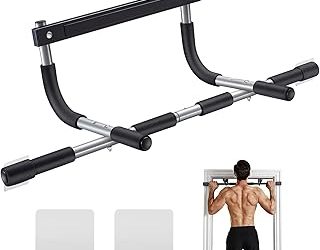
Best Pull Up Bar for Doorway Frames: Measure Before You Buy
Most doorway pull-up bar returns have nothing to do with the...
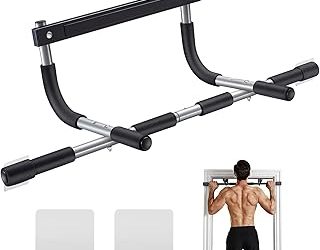
Best Door Pull Up Bar Picks Rated on Fit and Frame Safety
A pull up bar that lives in a doorway has one...
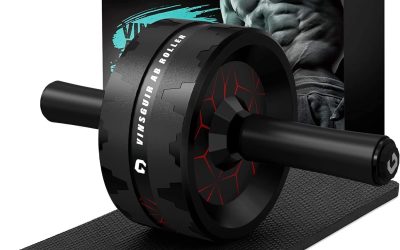
Best Ab Roller: Top Picks Reviewed (2026)
An ab wheel is the cheapest piece of equipment that can genuinely...
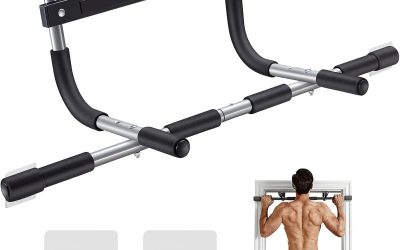
Best Pull Up Bar: Top Picks Reviewed (2026)
Do the geometry before you do anything else. A pull-up needs the...
Write Your Review
No reviews yet. Be the first to share your experience!