
Key takeaways
- Measure to the lowest obstruction: Not the ceiling — the pipe, the light fitting, the garage door track. That is your real number, and it is usually 4 to 8 inches lower than you assumed.
- Add 10 inches above the bar: Your head passes above the bar at the top of a rep. Ten inches of clearance is the minimum for a comfortable full range of motion without ducking.
- Doorways cheat the height problem: A doorway bar sits at about 6 feet 6 inches, so most people bend their knees on the hang. That is perfectly acceptable and works in rooms where nothing else will.
- Footprint includes the swing: A tower’s base is only part of the requirement. Leave 2 feet behind and in front so your legs and the dip station have room, or you will clip furniture on every set.
- Check the floor is level: Freestanding towers rock on uneven concrete or thick carpet. A sheet of plywood under the base solves it and also spreads the load.
What's inside
Do the geometry before you do anything else. A pull-up needs the bar high enough that your feet clear the floor at the bottom, and enough headroom that your chin clears the bar at the top without your skull meeting a joist. In practice that means roughly your standing reach plus 6 inches for the bar, plus another 8 to 10 inches of clearance above it. For someone 5-foot-10, that is comfortably over 8 feet of usable ceiling — which most basements do not have once you account for ductwork.
Get this wrong and you own an expensive coat rack. The six options below solve the height problem differently: a doorway bar that uses the frame you already have, two freestanding towers with fixed bar heights, and three rack or cage systems where the bar sits at the top of a 7-foot frame. What follows is a look at each one’s real vertical and floor requirements alongside what it can actually train.
As an Amazon Associate we earn from qualifying purchases at no extra cost to you. Product prices and availability are accurate as of the date shown and are subject to change.


Quick Comparison
| Product | Best For | Standout Feature | Watch Out For |
|---|---|---|---|
| Ally Peaks Doorway Bar | Low-ceiling rooms | Uses existing door height | Knees bend on the hang |
| Pooboo Power Tower | Standard 8 ft ceilings | Adjustable height frame | Wide base footprint |
| CAP Barbell Power Rack | Garages | Rack height plus attachments | Needs 8 ft plus clearance |
| Sunny Health Power Tower | Bodyweight-only setups | Three stations in one frame | Fixed bar height |
| Mikolo Smith Machine | Dedicated gym rooms | Stack, crossover and bar | Tallest and widest here |
| pooboo Power Cage | High-ceiling spaces | 2000 lb cage with pulleys | Very demanding on headroom |
How to Choose
- Measure to the lowest obstruction: Not the ceiling — the pipe, the light fitting, the garage door track. That is your real number, and it is usually 4 to 8 inches lower than you assumed.
- Add 10 inches above the bar: Your head passes above the bar at the top of a rep. Ten inches of clearance is the minimum for a comfortable full range of motion without ducking.
- Doorways cheat the height problem: A doorway bar sits at about 6 feet 6 inches, so most people bend their knees on the hang. That is perfectly acceptable and works in rooms where nothing else will.
- Footprint includes the swing: A tower’s base is only part of the requirement. Leave 2 feet behind and in front so your legs and the dip station have room, or you will clip furniture on every set.
- Check the floor is level: Freestanding towers rock on uneven concrete or thick carpet. A sheet of plywood under the base solves it and also spreads the load.
Top Picks Reviewed
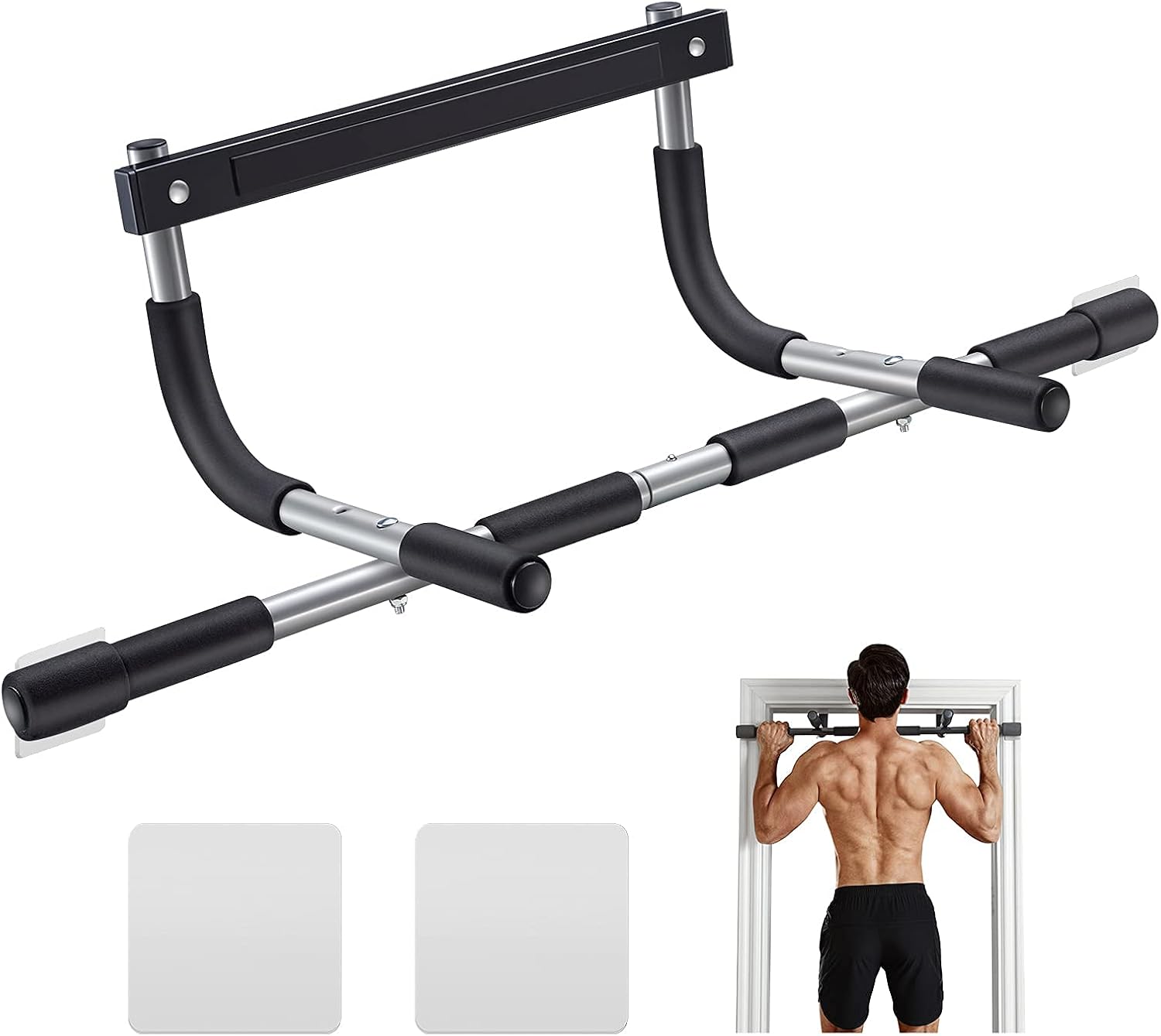
Best for Low Ceilings: Ally Peaks Doorway Bar
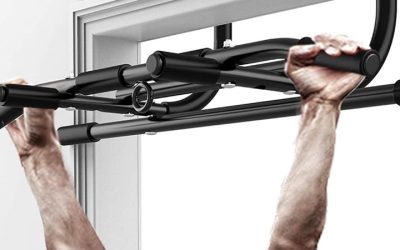
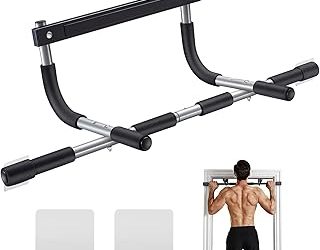
Because it mounts in a door opening, headroom above the bar is whatever the room offers and the bar height is fixed at a workable level. Rated to 440 lb with several grip positions, it handles weighted pull-ups for most people and removes in seconds.
You will bend your knees at the bottom of the hang unless you are quite short. That is not a training problem, but it does rule out strict hanging leg raises with straight legs.
Best Freestanding for 8-Foot Ceilings: Pooboo Power Tower
Adjustable height is the key feature here — you can set the bar to suit both the ceiling and the user, which fixed-height towers cannot. The 450 lb capacity means it is stable for heavier users and weighted work.
The base is wide, and once you allow for leg clearance front and back it occupies a genuine zone of the room. Level flooring matters more than the specification sheet suggests.
Best Multi-Station Frame: Sunny Health Power Tower
Pull-ups, dips, and knee raises from one frame make efficient use of the vertical space you are already committing. For a bodyweight-only home gym, it covers the whole upper body without a single weight plate.
The bar height is fixed, so in a room with under 8 feet of clearance taller users will find the top of the rep cramped. Measure before ordering rather than after.
Best for Garages: CAP Barbell Power Rack
A rack puts the pull-up bar at the top of the frame around 7 feet up, which suits standard garage ceilings, and the same structure gives you squat and bench safety bars. Attachments extend it as your training develops.
Assembly is substantial and the frame is not something you reposition casually. Confirm the garage door track does not intersect the space before you build it.
Best Complete Setup: Mikolo Smith Machine
Combining a weight stack, lat pulldown, cable crossover, and pull-up bar, this replaces several machines in a dedicated room. If you have the height and the floor, it removes almost every reason to leave the house to train.
It is the tallest and widest item here and needs a permanent home with clearance on multiple sides. In a room with ductwork, it simply will not fit.
Best for Tall Rooms: pooboo Power Cage
A 2000 lb rated cage with LAT pulldown and dual pulley crossover is the most capable frame on this list, giving pull-ups plus full barbell work with safety bars for solo training.
Headroom is the gating factor. Between the cage height and the space your body needs above the bar, this wants a genuinely tall room — many basements are excluded outright.
Frequently Asked Questions
How much ceiling height do I need for pull-ups?
Take your standing reach, add about 6 inches for the bar, then 8 to 10 inches of clearance above. For most adults that lands between 8 and 8 and a half feet of unobstructed height.
Can I do pull-ups with a low ceiling?
Yes, using a doorway bar and bending your knees on the hang. The range of motion for your arms and back is unchanged; only your legs are affected.
How much floor space does a power tower need?
Roughly a 4 by 4 foot base plus 2 feet of clearance front and back for your legs during dips and knee raises. Plan for around 4 by 8 feet of usable zone.
Will a tower tip over during pull-ups?
Well-rated towers with wide bases are stable for strict reps. Aggressive kipping shifts any freestanding frame, so keep movements controlled and put a board under the base on soft or uneven flooring.
Final Thoughts
If your ceiling is the limiting factor, the Ally Peaks Doorway Bar sidesteps the problem entirely and costs the least. With a standard 8-foot ceiling, the Pooboo Power Tower and its adjustable height is the safest freestanding bet, while the pooboo Power Cage is worth it only in a room with genuine headroom to spare.

Write Your Review
No reviews yet. Be the first to share your experience!