
Key takeaways
- Count the movement patterns: A complete upper body program needs vertical pull, horizontal pull, vertical push, and horizontal push. Note which ones each option covers.
- Do not ignore pushing: If your equipment only pulls, commit to floor pressing work. Pulling volume without pressing volume creates its own imbalance over years.
- Look for hanging core work: Knee and leg raises from a bar are among the best core exercises available and require no additional equipment.
- Plan progressive overload: Once you can do fifteen strict pull-ups, you need added weight. Check that your choice has the capacity headroom for a belt.
- Add bands, not machines: A set of loop bands turns any bar into an assisted, resisted, or rowing setup for very little money and no space.
What's inside
If you were allowed exactly one piece of home fitness equipment, a pull-up bar would be a defensible choice. It trains the entire posterior chain of the upper body, plus grip, plus core when you add leg raises. Paired with the floor for push-ups and squats, it covers more of a complete program than a treadmill, a bench, or a set of adjustable dumbbells would. That is the minimalist argument, and it holds up better than most fitness minimalism does.
Where it breaks down is pushing volume. A bar alone gives you no dips and no loaded pressing, which leaves an imbalance that shows up in shoulder health over years. So the real question for a one-purchase home gym is whether you buy a bar and accept doing push-up variations on the floor, or you buy a station that includes dips and accept the floor space. This roundup compares six options through that lens: how much of a complete program each one unlocks by itself.
As an Amazon Associate we earn from qualifying purchases at no extra cost to you. Product prices and availability are accurate as of the date shown and are subject to change.


Quick Comparison
| Product | Best For | Standout Feature | Watch Out For |
|---|---|---|---|
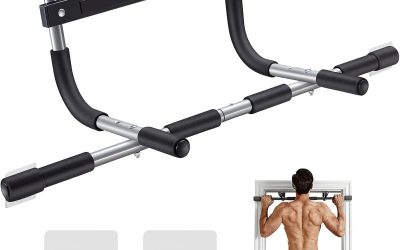
| Ally Peaks Multi-Grip Doorway Bar | Maximum exercise variety from a bar | Grip options cover lat, biceps, and back emphasis | No pushing movements at all |
| Ally Peaks 440 lb Doorway Bar | Adding weighted progression later | Capacity headroom for a weight belt | Single-function equipment by design |
| Sportneer No-Drill Doorway Bar | Absolute minimum footprint | Stores flat and weighs very little | Fewest exercise variations of the group |
| Upgrade Multi-Grip Bar with Larger Hooks | Floor use as well as hanging | Can double as a push-up handle on the floor | Floor use depends on your flooring and frame shape |
| Ally Peaks Width-Adjustable Doorway Bar | Adapting one bar to several exercises | Width changes alter which muscles dominate | Frequent adjustment wears the lock over time |
| SPORTSROYALS Free Standing Power Tower | A genuinely complete upper body gym | Pull, dip, knee raise, and push-up in one frame | Requires giving up real floor space permanently |
How to Choose
- Count the movement patterns: A complete upper body program needs vertical pull, horizontal pull, vertical push, and horizontal push. Note which ones each option covers.
- Do not ignore pushing: If your equipment only pulls, commit to floor pressing work. Pulling volume without pressing volume creates its own imbalance over years.
- Look for hanging core work: Knee and leg raises from a bar are among the best core exercises available and require no additional equipment.
- Plan progressive overload: Once you can do fifteen strict pull-ups, you need added weight. Check that your choice has the capacity headroom for a belt.
- Add bands, not machines: A set of loop bands turns any bar into an assisted, resisted, or rowing setup for very little money and no space.
Top Picks Reviewed
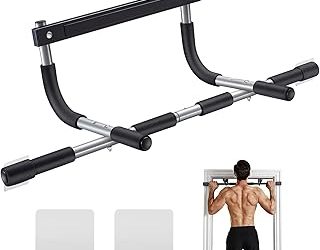
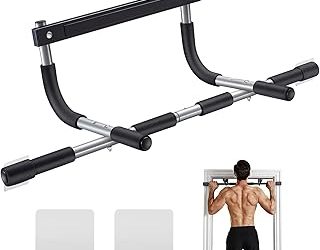
Most Exercises from a Bar: Ally Peaks Multi-Grip Doorway Bar
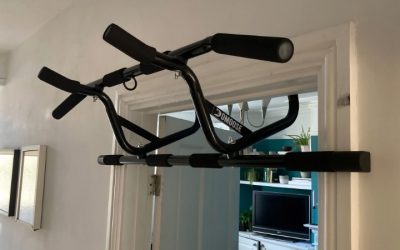
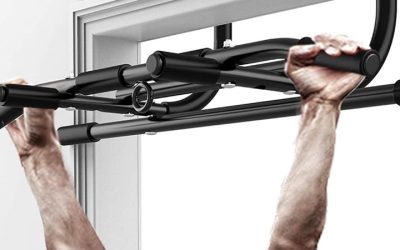
Wide, narrow, and neutral grips genuinely change which muscles do the work, which means one bar delivers three distinct pulling exercises plus hanging core work. For a minimalist setup, that breadth is the whole point.
It still does nothing for pressing. You will be doing push-ups on the floor, and while that is a perfectly good exercise, it does not replace dips for triceps and lower chest development.
Best Progression Headroom: Ally Peaks 440 lb Doorway Bar
Minimalist training runs out of road when body weight stops being challenging. The 440 lb rating gives room for a weight belt and 50 pounds without approaching the limits of the equipment.
It is deliberately single-function. There is no secondary use, no floor station, and nothing beyond hanging from it.
Smallest Total Footprint: Sportneer No-Drill Doorway Bar
For someone whose entire gym must fit under a bed, this is the answer. It stores flat, weighs little, and spans 29.5 to 37 inches so it works in almost any doorway you find.
Simplicity limits variety. Without neutral or angled grips, your pulling work is essentially one exercise done at different widths.
Best Dual Use: Upgrade Multi-Grip Bar with Larger Hooks
Set on the floor, a multi-grip frame makes a serviceable push-up handle station, which partially closes the pressing gap without buying anything else. That is a real minimalist win.
Whether it works depends on your floor and the frame geometry. On hard flooring it can slide, and some shapes are simply too tall to be comfortable for push-ups.
Most Adaptable Bar: Ally Peaks Width-Adjustable Doorway Bar
Changing the width changes the emphasis between lats and upper back, which effectively gives you two exercises from one piece of hardware. Combined with bands, it covers a surprising amount of a pulling program.
The adjustment mechanism is a wear item. Using it as a routine part of training rather than a one-time setup will loosen it faster than the design intends.
Most Complete Single Purchase: SPORTSROYALS Free Standing Power Tower
Pull-ups, dips, knee raises, and elevated push-ups from one frame covers every upper body movement pattern except horizontal rowing, which bands can supply. As a one-item gym, nothing else here comes close.
The floor space is the honest cost. Roughly four feet square plus clearance means a corner of a room is permanently gone, which is a real sacrifice in a small home.
Frequently Asked Questions
Can a pull-up bar be a complete home gym?
For upper body pulling and core, largely yes. Paired with floor push-ups and bodyweight leg work it covers a lot, but it leaves dips and loaded pressing uncovered.
What exercises can I do on a doorway bar?
Pull-ups, chin-ups, neutral-grip pull-ups if available, dead hangs, scapular pulls, and hanging knee raises. With a band you can add assisted variations and inverted rows.
Do I need dips if I do push-ups?
Push-ups train a similar pattern at lower intensity. Dips load the triceps and lower chest much harder, so serious trainees benefit from having both available.
How do I keep progressing with only a bar?
Add reps, then slow the tempo, then move to harder variations like archer or L-sit pull-ups, then add external weight with a belt or backpack.
Final Thoughts
A single bar covers more of a real program than most people expect, and grip variety is what extends its useful life the furthest. If you have the floor space and want a genuinely complete upper body setup in one purchase, the tower is the honest answer. If you do not, buy the most versatile bar you can fit and commit to floor pressing work to keep the program balanced.
Write Your Review
No reviews yet. Be the first to share your experience!